
What's Happening?
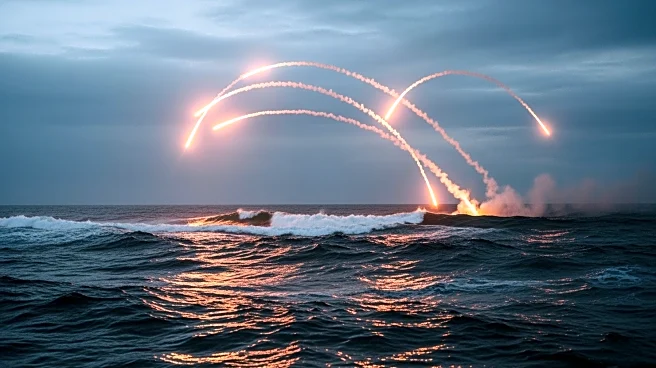
Chinese forces fired three flares from an artificial island toward a Philippine plane conducting a routine patrol in the disputed South China Sea. The incident occurred near the Chinese-occupied Subi Reef,
but did not disrupt the aircraft's surveillance mission, according to the Philippine coast guard. The patrol, carried out by the Philippine fisheries bureau, aimed to monitor the marine environment and assess fisheries resources. During the flight, the Philippine plane also observed a Chinese hospital ship, two coast guard ships, and 29 suspected militia ships in the area. The patrol plane flew near other disputed islands and was challenged by a Chinese navy ship via radio. Despite these challenges, the mission was completed safely.
Why It's Important?
This incident underscores the ongoing tensions in the South China Sea, a region with significant strategic and economic importance due to its rich resources and vital shipping lanes. China's assertive actions, including the firing of flares, highlight its determination to assert control over the area, which is also claimed by several other countries, including the Philippines. The United States, while not a claimant, has a vested interest in maintaining freedom of navigation in these waters and has pledged to defend the Philippines under mutual defense treaties. The situation could potentially escalate, affecting regional stability and international trade routes.
What's Next?
The incident may prompt diplomatic responses from the Philippines and its allies, including the United States, which has historically supported freedom of navigation operations in the region. The Philippines might seek to strengthen its maritime capabilities and alliances to counterbalance China's influence. Additionally, this event could lead to increased international scrutiny and calls for peaceful resolution of territorial disputes in the South China Sea.
Beyond the Headlines
The firing of flares by Chinese forces raises questions about the rules of engagement and the potential for miscalculation in the region. It also highlights the broader geopolitical struggle for influence in the Asia-Pacific, where China's growing military presence is viewed with concern by neighboring countries and global powers. The incident may also impact the livelihoods of local fishermen and the environmental health of the region, as increased militarization could disrupt traditional fishing grounds and marine ecosystems.