


What's Happening?
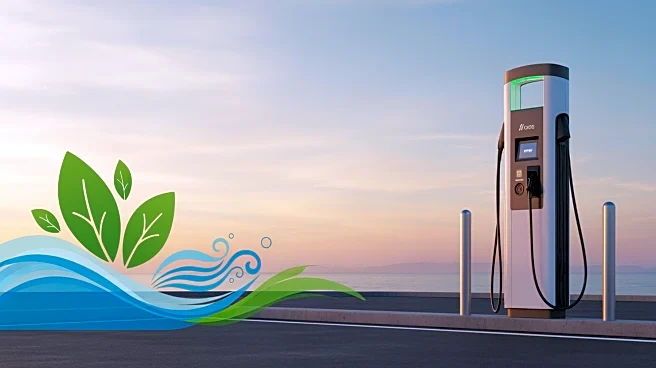
Comité Cívico del Valle (CCV), in partnership with the Binational Environmental Justice Coalition and the Center for Renewable Energy and Environmental Quality (CERCA), has initiated a binational effort to enhance electric vehicle (EV) infrastructure
across the Californias. This initiative involves representatives from the Baja California State Energy Commission, academia, and environmental leaders who toured CCV's network of community-based EV charging stations in Calexico, Brawley, Calipatria, and El Centro. The collaboration aims to ensure that rural and frontline communities are included in the transition to clean energy. The tour highlighted the technical aspects of the charging stations, including Level 2 and Level 3 fast chargers, and discussed the potential for replicating this model in Baja California. The initiative is part of a broader strategy to create a clean transportation corridor that benefits local communities economically and environmentally.
Why It's Important?
This initiative is significant as it addresses the need for inclusive clean energy solutions that do not leave rural and underserved communities behind. By focusing on community-centered infrastructure, the project aims to provide economic and public health benefits, such as job creation and improved air quality. The collaboration between U.S. and Mexican entities highlights the importance of cross-border partnerships in addressing shared environmental challenges. Expanding EV infrastructure can also enhance tourism and economic opportunities in isolated regions, supporting sustainable development. The project underscores the role of environmental justice in the energy transition, ensuring that local people and economies are integral to the process.
What's Next?
The delegation concluded their tour with discussions on future steps, including technical collaboration and the expansion of the clean transportation corridor. The focus will be on replicating the community-based electromobility model across the Baja California peninsula. This involves exploring scalable, renewable energy-powered solutions that can be implemented in areas with limited access to the electrical grid. The initiative will continue to support residents through programs like the Driving Clean Assistance Program, which provides financial assistance for purchasing electric vehicles. Ongoing collaboration and knowledge exchange between U.S. and Mexican partners will be crucial in advancing these goals.