







What's Happening?
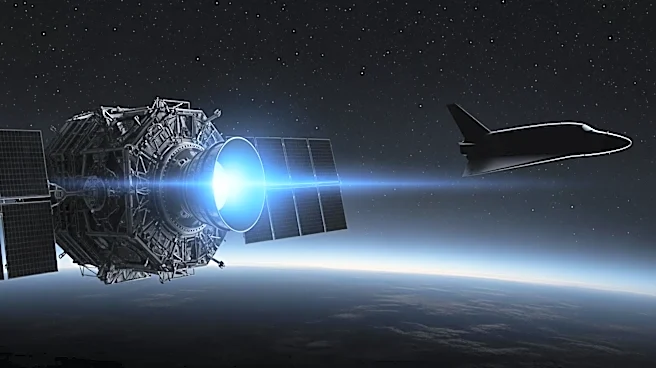
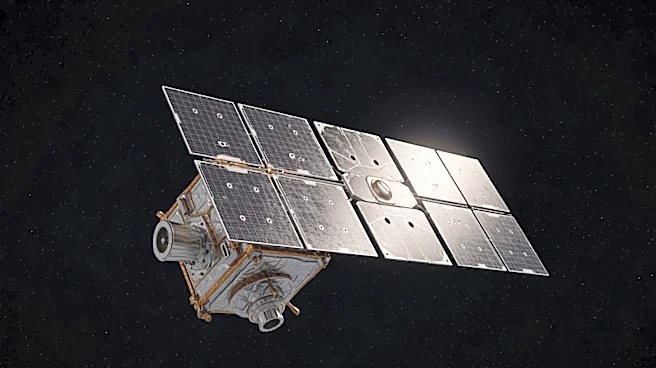
NASA is preparing to launch the Katalyst mission, which aims to extend the operational life of the Neil Gehrels Swift Observatory by boosting its orbit. The mission involves a robotic servicing spacecraft, named LINK, which will rendezvous with the Swift Observatory to raise
its altitude. This effort is part of NASA's strategy to advance spacecraft servicing technology, a key capability for future space exploration. The LINK spacecraft is set to launch on Northrop Grumman's Pegasus XL rocket from Kwajalein Atoll in the Marshall Islands. The Swift Observatory, launched in 2004, has been instrumental in studying high-energy cosmic events such as gamma-ray bursts. However, its orbit has been decaying due to increased solar activity. Rather than allowing the observatory to re-enter Earth's atmosphere, NASA has contracted Katalyst to perform this mission, demonstrating the potential for extending the life of space assets.
Why It's Important?
The Katalyst mission represents a significant advancement in space technology, particularly in the field of robotic servicing of spacecraft. By successfully boosting the orbit of the Swift Observatory, NASA can extend the observatory's mission life, allowing it to continue its valuable contributions to astrophysics. This mission also sets a precedent for future efforts to maintain and extend the life of other space assets, potentially reducing the need for costly replacements. The development of such technology could lead to more sustainable space exploration practices, benefiting scientific research and commercial space endeavors. Additionally, the mission underscores the importance of international collaboration and innovation in addressing the challenges of space exploration.
What's Next?
Following the successful launch and execution of the Katalyst mission, NASA and its partners will likely evaluate the outcomes to refine and enhance future spacecraft servicing missions. This could lead to the development of more advanced robotic systems capable of performing a wider range of maintenance tasks on various types of space assets. The success of this mission may also encourage further investment in space technology and exploration initiatives, potentially leading to new partnerships and projects aimed at exploring deeper into space. Stakeholders in the space industry, including government agencies and private companies, will be closely monitoring the mission's progress and results.