



What's Happening?
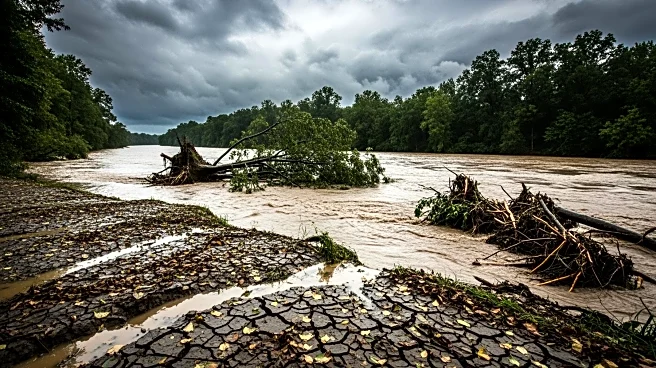
In southeastern Brazil, torrential rains have led to devastating floods and landslides, resulting in the deaths of at least 30 people. The state of Minas Gerais experienced a river bursting its banks, turning streets into torrents of brown water. The cities
of Juiz de Fora and Ubá were particularly affected, with 12 houses in a hillside neighborhood of Juiz de Fora swept away in a massive landslide. Firefighters and search dogs are actively searching for 39 people still missing in the debris. The region has seen record rainfall this month, prompting the mayor of Juiz de Fora to declare a state of emergency. Over 200 people have been rescued, and approximately 440 individuals have been displaced, receiving temporary shelter support. The Brazilian government is focusing on providing humanitarian assistance and restoring basic services.
Why It's Important?
This disaster highlights the increasing frequency and severity of extreme weather events in Brazil, often linked to climate change. The impact on local communities is profound, with loss of life, displacement, and destruction of property. The economic implications are significant, as resources are diverted to emergency response and reconstruction efforts. The situation underscores the urgent need for improved infrastructure and disaster preparedness in vulnerable regions. Additionally, it raises questions about the long-term sustainability of current environmental policies and the necessity for global cooperation in addressing climate change.
What's Next?
The immediate focus is on search and rescue operations, with hopes of finding survivors diminishing as time passes. The Brazilian government, led by President Luiz Inácio Lula da Silva, is prioritizing humanitarian aid and the restoration of essential services. In the longer term, there will likely be discussions on enhancing infrastructure resilience and implementing more robust climate adaptation strategies. The international community may also be called upon to provide support and expertise in disaster management and climate mitigation efforts.
Beyond the Headlines
The tragedy in Brazil serves as a stark reminder of the human cost of climate change. It highlights the ethical responsibility of governments and corporations to take meaningful action to reduce carbon emissions and invest in sustainable practices. The cultural impact is also significant, as communities grapple with the loss of loved ones and the challenge of rebuilding their lives. This event may catalyze a broader societal shift towards environmental consciousness and advocacy for stronger climate policies.