




What's Happening?
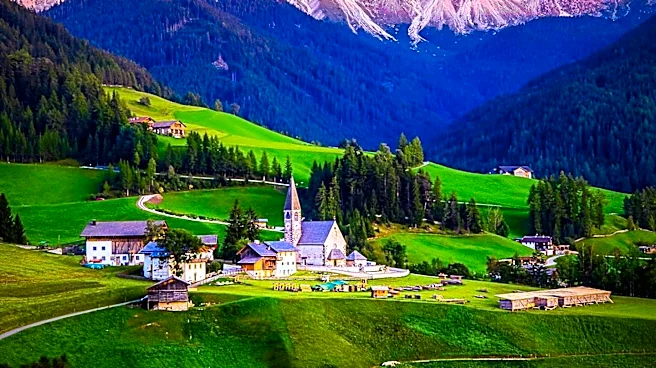
The Dolomites, a UNESCO World Heritage site, are facing significant challenges due to overtourism, leading local authorities to implement measures to manage visitor numbers. Popular spots like the Three Zinnen have seen up to 15,000 visitors on peak days,
prompting officials in the municipality of Auronzo to call for stricter limits, suggesting the area can only sustainably handle around 5,000 people daily. This influx of tourists, partly fueled by social media, has resulted in overcrowded trails, traffic congestion, and increased strain on the delicate mountain environment. Visitors are reportedly experiencing long queues for photo opportunities, shuttle buses, and even at mountain huts. Other popular locations, such as Pragser Wildsee, have also introduced access restrictions and reservation systems during summer months to control crowds and alleviate pressure on infrastructure. The issue is not new; a study by the Italian Central Bank in June indicated that the Dolomites' UNESCO designation in 2009 significantly boosted tourist overnight stays, particularly in Trentino, exacerbating the problem.
Why It's Important?
The struggle with overtourism in the Dolomites highlights a growing global concern for popular natural and cultural sites. For the U.S. tourism industry and environmental policy, this situation serves as a critical case study. Uncontrolled tourism can degrade natural landscapes, diminish the quality of visitor experience, and strain local resources, potentially leading to long-term economic and ecological damage. If U.S. national parks and popular destinations do not proactively manage visitor flows, they risk similar issues, impacting their sustainability and appeal. The economic implications are also significant; while tourism brings revenue, overtourism can lead to increased operational costs for infrastructure maintenance and waste management, potentially offsetting economic gains. Furthermore, the negative experiences reported by visitors due to overcrowding could deter future tourism, affecting local businesses and economies dependent on the industry. This situation underscores the need for sustainable tourism models that balance economic benefits with environmental preservation and visitor satisfaction.
What's Next?
Authorities in the Dolomites are expected to continue refining and enforcing visitor management strategies, including reservation systems and shuttle bus services, to control access to highly frequented areas. The call from local officials for stricter daily visitor limits suggests that more comprehensive and potentially more restrictive policies could be implemented in the future. There may also be increased efforts to promote less-visited areas to distribute tourist traffic more evenly across the region. Discussions will likely continue among local governments, environmental groups, and tourism stakeholders to find a sustainable balance between economic benefits and environmental protection. The success or challenges of these measures will provide valuable lessons for other popular destinations worldwide, including those in the U.S., grappling with similar issues of overtourism and the impact of social media on visitor numbers.
Beyond the Headlines
The phenomenon of overtourism in the Dolomites, significantly amplified by social media, points to a broader cultural shift in how people engage with travel and natural landscapes. The desire for 'Instagrammable' moments often drives visitors to a few iconic locations, leading to concentrated pressure rather than a dispersed appreciation of a region. This raises ethical questions about the responsibility of tourists and social media platforms in promoting sustainable travel. The long-term implications include the potential commodification of natural beauty, where the authentic experience is overshadowed by the pursuit of viral content. For the U.S., this trend could accelerate the degradation of its own natural wonders if not addressed through public education campaigns and policies that encourage responsible tourism. It also highlights the tension between economic development through tourism and the imperative to preserve natural heritage for future generations, necessitating a re-evaluation of tourism's purpose and impact.