
What's Happening?
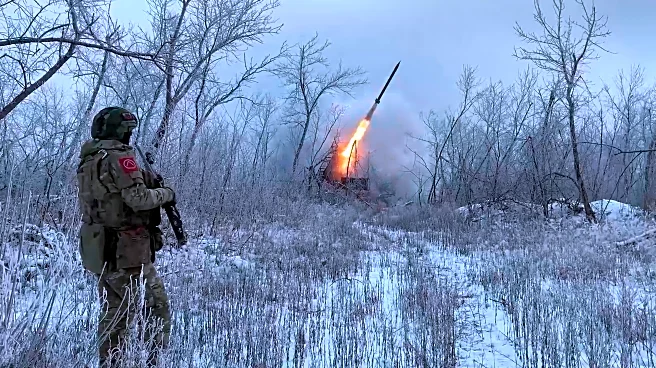
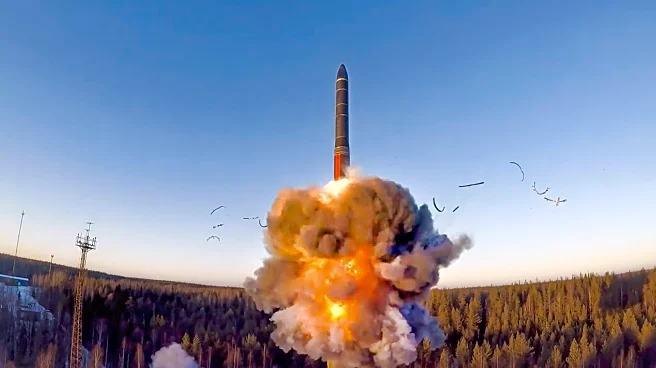
Ukrainian drones have ignited a fire at a Russian oil depot in the Volgograd region, as part of a strategic effort to disrupt Moscow's oil export revenue. This action comes in response to Russia's recent deployment of a hypersonic missile and a large-scale
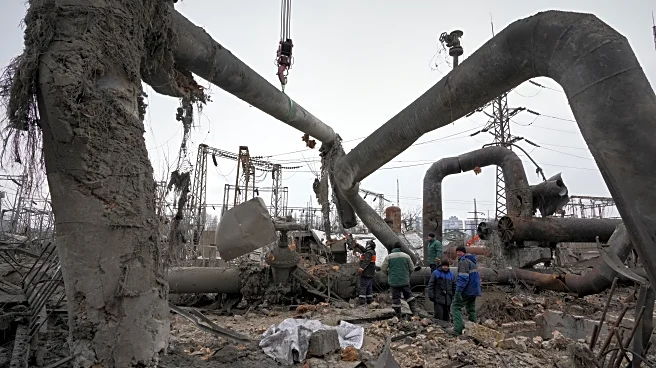
drone attack on Ukraine, which severely damaged the country's power grid. The Ukrainian air force reported intercepting 94 out of 121 Russian drones. The attack on the oil depot is part of Ukraine's broader strategy to weaken Russia's financial resources needed for its military operations. Meanwhile, Russia's missile and drone strikes have left millions of Ukrainians without essential services such as heat, electricity, and water, exacerbating the humanitarian crisis.
Why It's Important?
The escalation in military tactics between Ukraine and Russia highlights the ongoing intensity of the conflict, with significant implications for both nations and their allies. Ukraine's targeting of Russian energy infrastructure aims to cut off vital revenue streams for Moscow, potentially impacting Russia's ability to sustain its military efforts. Conversely, Russia's attacks on Ukraine's power grid are designed to undermine civilian morale and disrupt daily life, which could pressure the Ukrainian government. The use of advanced weaponry, such as hypersonic missiles, signals a potential shift in the conflict's dynamics, raising concerns among NATO allies about regional stability and security.
What's Next?
The situation is likely to prompt further military responses from both sides, with Ukraine possibly continuing its strategy of targeting Russian infrastructure. Internationally, NATO and other allies may need to reassess their support strategies for Ukraine, especially in light of the advanced weaponry being used. Diplomatic efforts may intensify to prevent further escalation and to explore potential peace negotiations. The humanitarian impact on Ukrainian civilians will likely draw increased international attention and aid efforts.