




What's Happening?
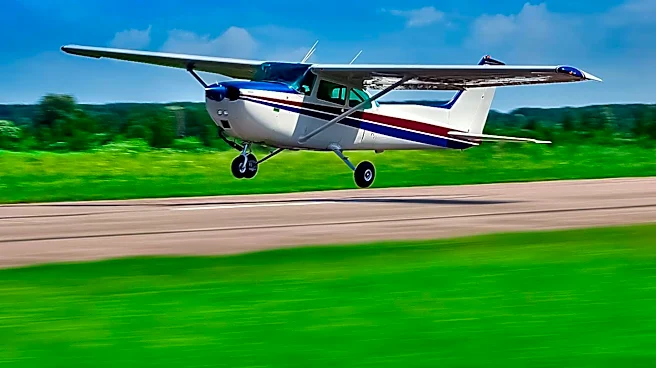
A pilot has died and two Pennsylvania State Troopers were injured after a Cessna 150 airplane and a Pennsylvania State Police Bell 407 helicopter collided at Carlisle Airport. The incident occurred around 7 p.m. on Wednesday. According to Governor Josh
Shapiro, the pilot of the Cessna, believed to be the sole occupant, died in the crash. The two troopers, Corporal Bryce Corman and Trooper Jason Mills, were conducting routine training exercises and were on the ground after training when the Cessna unexpectedly veered right and struck the helicopter from the rear. The helicopter, losing its blade and tail, rolled onto its roof. Corporal Corman was able to assist Trooper Mills, who sustained more severe injuries, in escaping the wreckage through a window. Both troopers were transported to Penn State Hershey Medical Center, where they are expected to recover. The Federal Aviation Administration (FAA) and the National Transportation Safety Board (NTSB) are investigating the incident.
Why It's Important?
This incident highlights significant concerns regarding aviation safety, particularly in airport environments where both civilian and law enforcement aircraft operate. The collision involving a state police helicopter underscores the risks inherent in routine training operations and the potential for catastrophic outcomes when safety protocols are breached or unexpected events occur. For law enforcement agencies, such an event can lead to a review of aviation training procedures, equipment maintenance, and operational safety measures. The involvement of a civilian aircraft also brings into focus general aviation safety regulations and pilot training standards. The NTSB's investigation will be crucial in identifying the cause, which could lead to new recommendations or changes in aviation policy to prevent similar incidents, impacting both military and civilian flight operations across the U.S.
What's Next?
The FAA and NTSB will continue their joint investigation into the collision. The wreckage will be documented at the scene and then moved to a secure facility for further examination. A preliminary report from the NTSB is expected within the next day, providing initial findings. This investigation will aim to determine the exact sequence of events, factors contributing to the Cessna's unexpected maneuver, and any potential air traffic control or communication issues. Depending on the findings, there could be recommendations for changes in airport procedures, air traffic management, or pilot training requirements. The injured troopers will continue their recovery, with one expected to be discharged soon and the other undergoing further tests. The Pennsylvania State Police will likely conduct an internal review of their aviation unit's protocols.
Beyond the Headlines
This tragic accident could prompt a broader re-evaluation of safety measures at smaller, regional airports that handle a mix of general aviation and specialized operations, such as law enforcement training. It raises questions about the adequacy of visual and communication protocols between different types of aircraft and ground personnel. The incident also underscores the inherent dangers faced by law enforcement personnel in their specialized roles, even during routine training. Furthermore, the psychological impact on the air traffic controllers, first responders, and airport staff involved in witnessing and managing such a severe event can be profound. The NTSB's final report will be critical in shaping future aviation safety policies and potentially influencing aircraft design or operational standards to mitigate risks in similar scenarios.