







What's Happening?
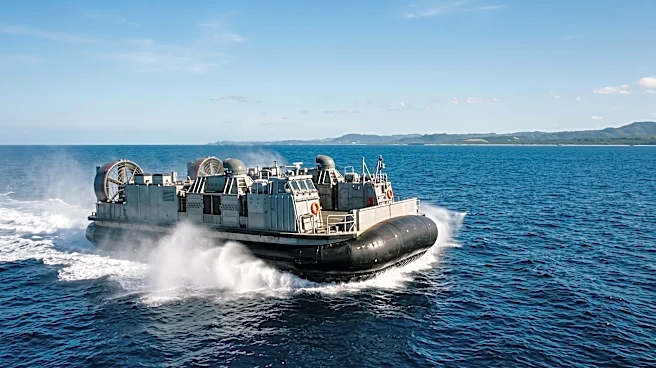
Textron Systems Corporation has been awarded a contract modification valued at $230 million by the U.S. Navy. This modification is for the production and delivery of two additional Ship-to-Shore Connector (SSC) craft. These SSCs are designed to enhance
the Navy's amphibious operations by providing critical capabilities for moving personnel and material from offshore vessels to land. Textron Systems will manufacture these craft at its New Orleans, Louisiana shipyard. The SSCs are engineered to navigate various tides, terrains, and obstacles, enabling access to approximately 80% of the world's coastlines. To date, Textron Systems has already delivered 18 SSCs to the Navy, with 13 more currently in different stages of testing and production. The SSCs are capable of carrying a 74-ton payload and offer over 1,600 square feet of deck space, allowing for the transport of supplies, vehicles, including up to four Advanced Reconnaissance Vehicles (ARVs), and equipment.
Why It's Important?
This contract modification is significant for U.S. national defense and humanitarian efforts. The SSCs are a vital asset for the U.S. Navy and Marine Corps, enabling high-speed and heavy-payload transportation in logistically challenging environments. Their ability to access a vast majority of the world's coastlines enhances the operational reach and flexibility of U.S. naval forces, particularly in areas where traditional port facilities are unavailable. This capability is crucial for both wartime missions and humanitarian assistance/disaster relief (HA/DR) operations, allowing for the rapid delivery of food, water, medical supplies, and life-saving equipment to remote or disaster-stricken regions. The design improvements in the SSCs, such as increased payload capacity, speed, and reduced logistical requirements compared to legacy platforms, contribute to more efficient military logistics and deployment, ultimately strengthening the readiness and operational capabilities of the U.S. military.
What's Next?
Textron Systems will proceed with the production and delivery of the two additional SSC craft at its New Orleans facility, as stipulated by the contract modification. This will contribute to the Navy's ongoing procurement program, further bolstering its amphibious operational capabilities. The continued delivery of these advanced connectors will allow the U.S. Navy and Marine Corps to integrate them into their existing fleet, enhancing their ability to conduct a wider range of missions, from combat support to disaster response. The focus will likely remain on ensuring the timely and efficient production of these craft, as well as their seamless integration into naval operations, to maintain and strengthen the capabilities required for modern amphibious warfare.
Beyond the Headlines
The development and deployment of the Ship-to-Shore Connector highlight a broader strategic shift towards enhancing expeditionary capabilities and logistical flexibility in military operations. In an increasingly complex global environment, the ability to project power and provide aid rapidly to diverse geographical locations is paramount. The SSC's design, which emphasizes reduced maintenance and operational requirements, reflects a trend towards more sustainable and cost-effective defense solutions. Furthermore, the dual-use nature of these craft, serving both military and humanitarian purposes, underscores the evolving role of defense technologies in addressing a wider spectrum of global challenges, from conflict zones to natural disaster areas. This investment in versatile platforms like the SSC signifies a commitment to maintaining a robust and adaptable naval presence worldwide.