




What's Happening?
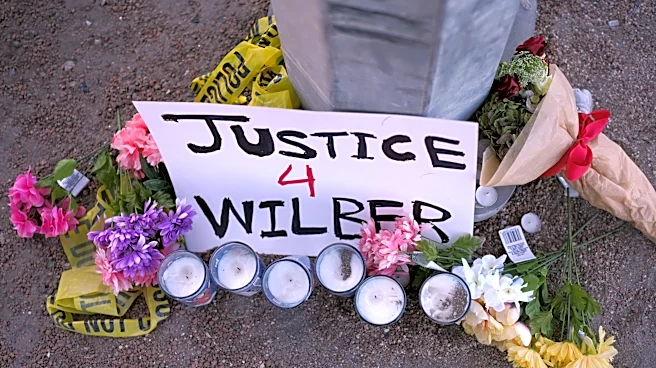
A federal judge in Austin, Texas, has denied bond for Wilber Garcés Pérez, a 28-year-old Venezuelan man who was shot and injured by an Immigration and Customs Enforcement (ICE) officer earlier this month. U.S. Magistrate Judge Dustin Howell ruled that
federal prosecutors have probable cause to support a criminal charge against Garcés Pérez for assaulting, resisting, interfering, and impeding a federal officer. The judge also determined there is sufficient evidence to believe Garcés Pérez might flee if released on bond, citing details from his initial interaction with ICE officers and a prior failure to appear for an immigration hearing. Garcés Pérez appeared in court in a wheelchair with his left arm in a sling, and his attorneys confirmed a bullet remains in his back from the September 20 shooting in North Austin.
Why It's Important?
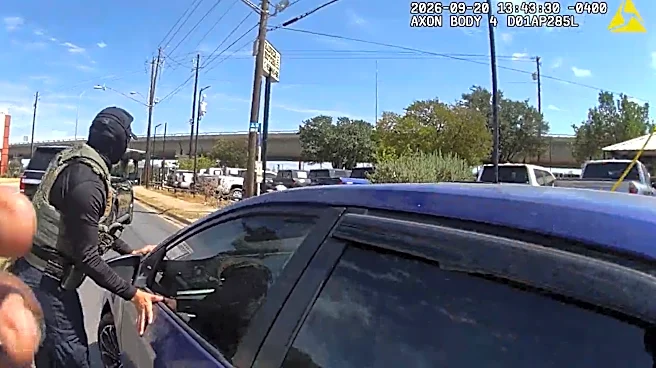
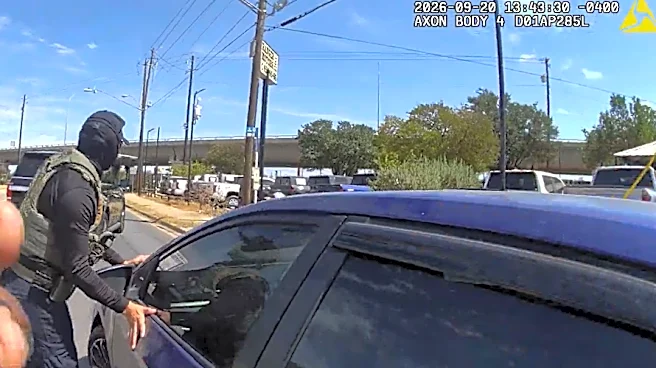
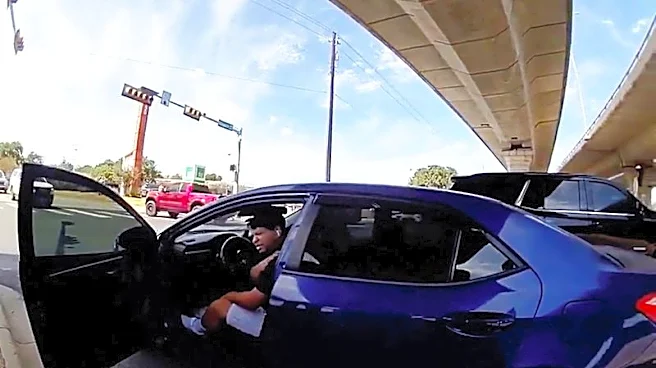
This ruling is significant as it allows the criminal prosecution of Garcés Pérez to move forward, keeping him in federal custody despite his injuries. The case highlights the complexities and controversies surrounding ICE operations, particularly regarding the use of force and the legal processes that follow. The body camera footage, which prosecutors presented as evidence of Garcés Pérez allegedly striking an officer with his driver's side mirror, is a critical component of the prosecution's case. However, the defense argues that the footage is unclear, raising questions about the justification for the shooting. The incident also brings to light the issue of officer accountability, as one of the ICE officers involved was not wearing a body camera, and no explanation was provided for this. The outcome of this case could influence future policies regarding ICE protocols, body camera usage, and the legal rights of individuals during encounters with immigration enforcement.
What's Next?
Wilber Garcés Pérez will remain in federal custody as the criminal prosecution proceeds. His immigration attorney, Kate Lincoln-Goldfinch, stated that separate immigration proceedings are also expected to continue. The defense plans to challenge the charges, arguing that Garcés Pérez did not commit an act of violence. A key point of contention will be the interpretation of the body camera footage and the circumstances leading to the shooting. The fact that Garcés Pérez still has a bullet in his back and requires life-saving surgery adds a humanitarian dimension to the legal proceedings. Future court dates will likely involve further presentation of evidence, witness testimonies, and legal arguments from both sides. The case will continue to be watched by civil rights advocates and those concerned with immigration enforcement practices.
Beyond the Headlines
The incident involving Wilber Garcés Pérez and ICE officers delves into the broader national debate on immigration enforcement, police conduct, and the rights of individuals, particularly non-citizens, within the U.S. legal system. The use of force by federal agents, especially when resulting in serious injury, often sparks public scrutiny and calls for transparency and accountability. The absence of body camera footage from one of the officers involved raises questions about evidentiary standards and the potential for bias in investigations. Furthermore, the intersection of criminal charges and immigration proceedings for individuals like Garcés Pérez underscores the intricate and often challenging legal landscape faced by migrants in the U.S. This case could contribute to ongoing discussions about the need for comprehensive immigration reform and clearer guidelines for law enforcement interactions with the public.