
What's Happening?
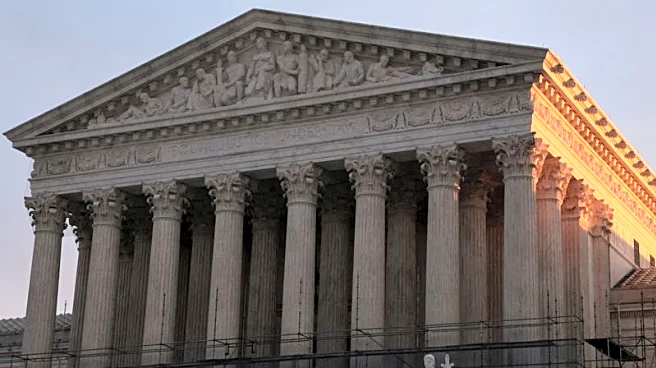
Justice Ketanji Brown Jackson has publicly criticized the Supreme Court's use of emergency rulings, known as the 'shadow docket,' to support President Trump's policies. Speaking at a legal event, Jackson expressed concern over the court's increased involvement
in cases before lower courts have fully deliberated. She described this trend as problematic, suggesting it pressures lower courts to align with the Supreme Court's decisions prematurely. Jackson has dissented in several cases where the court's emergency rulings favored Trump's administration, particularly regarding immigration policies and federal layoffs. Justice Brett Kavanaugh, also present at the event, defended the court's actions, attributing the rise in emergency rulings to the need for quick decisions in response to executive orders amid congressional gridlock.
Why It's Important?
The use of the shadow docket by the Supreme Court has significant implications for the U.S. legal system and the balance of power between the executive and judicial branches. Jackson's critique highlights concerns about the transparency and accountability of the court's decision-making process. The reliance on emergency rulings can undermine the thoroughness of judicial review and potentially skew legal outcomes in favor of the executive branch. This issue is particularly relevant in the context of President Trump's administration, which has frequently utilized executive orders to implement policy changes. The debate over the shadow docket reflects broader tensions within the court and raises questions about the role of the judiciary in checking executive power.
What's Next?
The ongoing discussion about the shadow docket is likely to continue as the Supreme Court faces more emergency petitions. The court's approach to these cases could influence future legal strategies and the dynamics between the branches of government. Stakeholders, including legal scholars and policymakers, may push for reforms to increase transparency and ensure that emergency rulings do not bypass standard judicial procedures. The court's handling of upcoming cases, particularly those involving contentious executive actions, will be closely watched for indications of how it balances expediency with judicial integrity.