


What's Happening?
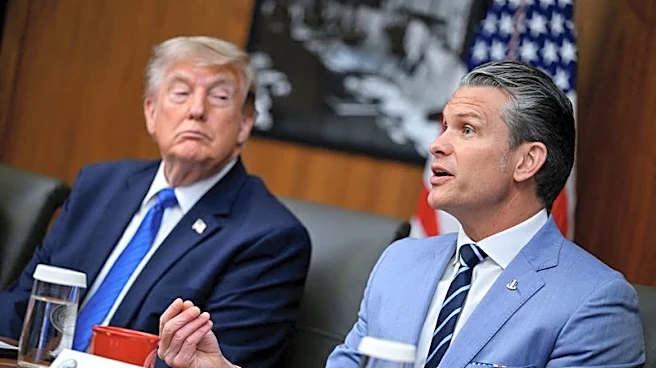
S.E. Cupp, in an article for the New York Daily News, has publicly advocated for the dismissal of Defense Secretary Pete Hegseth. Cupp argues that Hegseth's leadership is creating significant 'turbulence' within the U.S. military, citing concerns from
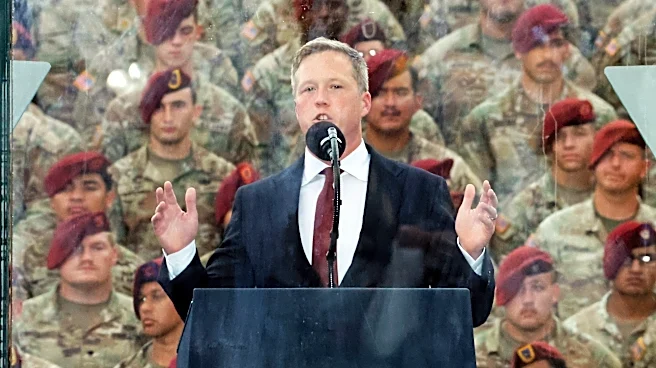
a European defense official about Hegseth's focus on 'muscles, dudes in dresses, and testosterone' rather than core defense priorities. The article highlights a CNN report detailing growing internal military concern over Hegseth's leadership. Furthermore, Cupp points to recent high-profile resignations and firings, including Army Secretary Dan Driscoll, and the 'forced exits' of seasoned combat leaders like Army Chief of Staff Randy George, Gen. Christopher Donahue, and Gen. David Hodne. These events, coupled with reports of critical shortages in military materials and deteriorating conditions on vessels like the USS Abraham Lincoln, are raising questions about military readiness under Hegseth. Cupp also notes Hegseth's engagement in partisan political activities, such as campaigning for candidates in Iowa and Kentucky, which she describes as moves typically avoided by Pentagon leaders.
Why It's Important?
Cupp's call for Defense Secretary Hegseth's removal is significant due to its potential impact on the Republican Party's standing ahead of the midterm elections and the operational integrity of the Defense Department. His reported focus on 'culture wars, wokeism, and DEI' is seen as diverting attention from critical military functions, especially amidst an ongoing war in Iran that is losing public support. The article states that Hegseth's net approval rating is a 'miserable -22,' which is considerably lower than other cabinet officials. This low approval, combined with public concerns from his own commanders and issues like critical material shortages, could undermine public confidence in the military's leadership and readiness. For the GOP, Hegseth's continued tenure and perceived missteps could further complicate their efforts to campaign in tight races, adding to existing challenges such as President Trump's tariffs and trade disputes. A change in leadership, as suggested by Cupp, could serve to 'restore order' to the Defense Department and 'change the narrative' for Republicans at a crucial political juncture.
What's Next?
The immediate future could see increased pressure on President Trump to address the concerns raised about Defense Secretary Hegseth's leadership, particularly as the midterm elections approach. If President Trump were to act on Cupp's suggestion, Hegseth's removal would likely lead to a new appointment for the Defense Secretary position, potentially signaling a shift in the department's priorities and public messaging. Such a change could aim to stabilize the military's internal environment and project a more unified and focused image to the public and international allies. Conversely, if Hegseth remains in his position, the criticisms regarding military readiness, leadership focus, and political engagement are likely to persist and could become a more prominent issue in the midterm campaigns. The ongoing war in Iran, which is described as 'increasingly unwinnable and also unendable,' will continue to be a backdrop against which Hegseth's performance and the administration's defense policies are judged. Prediction markets suggest peace talks for the Iran war may not occur until 2027, indicating a prolonged conflict that will continue to test the Defense Department's leadership.
Beyond the Headlines
Beyond the immediate political and operational implications, the debate surrounding Defense Secretary Hegseth's leadership touches upon deeper issues concerning the politicization of the military and the balance between cultural priorities and national security. The description of Hegseth's focus on 'muscles, dudes in dresses, and testosterone' by a European defense official, and his reported engagement in 'culture wars, wokeism, and DEI,' highlights a growing tension within the military between traditional defense objectives and contemporary social debates. This shift in focus, if perceived as widespread, could have long-term consequences for military recruitment, morale, and its ability to attract and retain diverse talent. The article also implicitly raises questions about the appropriate role of a Defense Secretary in partisan politics, especially when the nation is engaged in a significant conflict. The suggestion that Hegseth 'doesn’t want to do this job anyway' and harbors presidential ambitions further complicates the ethical and professional boundaries of his office, potentially eroding public trust in the impartiality and dedication of military leadership.