
What's Happening?
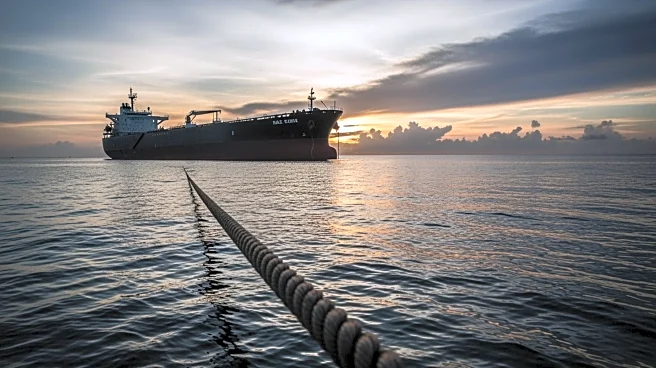
The United States Southern Command announced the seizure of a sanctioned oil tanker, the Motor/Tanker Olina, in the Caribbean Sea. This operation was conducted by US troops in coordination with the Department
of Homeland Security, launching from the USS Gerald R. Ford. The Olina, which was sanctioned under Ukraine/Russia-related sanctions, was apprehended without incident. The tanker had been listed under a different name and Panama flag but was identified by its unique ship number. This seizure follows the recent capture of two other Venezuela-linked tankers, including a Russian-flagged vessel. The US has been actively enforcing a blockade on sanctioned oil tankers, a policy initiated by President Trump in December. The White House has stated that President Trump is committed to enforcing this embargo against vessels illegally transporting oil.
Why It's Important?
The seizure of the Olina highlights the US's ongoing efforts to enforce sanctions and blockades against oil tankers linked to Venezuela and other sanctioned entities. This action underscores the US's commitment to its foreign policy objectives, particularly in curbing illegal oil transportation. However, these seizures could escalate tensions with countries like Russia and Iran, which may view these actions as provocations. The potential for retaliatory measures from these nations poses a risk to global maritime security and could impact international relations. Additionally, the seizures raise concerns for the shipping industry, which must navigate the complexities of geopolitical tensions and the risks of becoming entangled in proxy conflicts.
What's Next?
The US is likely to continue its enforcement of sanctions on oil tankers, which may lead to further seizures. This could provoke responses from affected countries, potentially leading to diplomatic confrontations or retaliatory actions. The shipping industry will need to assess the risks associated with operating in regions where such tensions are high. Companies may need to enhance their risk management strategies to address potential threats across physical, cyber, legal, and geopolitical domains. The international community will be watching closely to see how these developments unfold and what impact they may have on global trade and security.