
What's Happening?
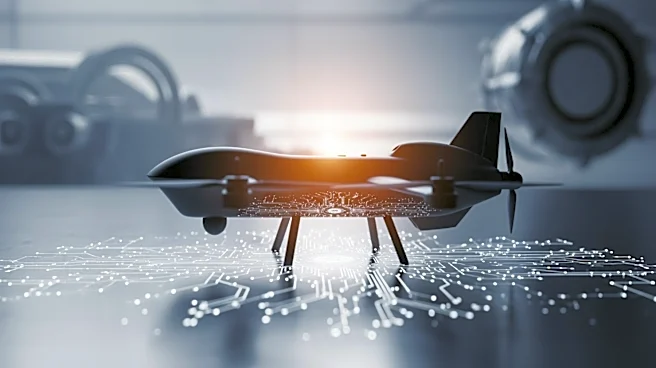
The U.S. defense industry is adapting to new economic realities in conflict, as demonstrated by the situation in Ukraine, where adversaries deploy inexpensive drones in large numbers. In response, the U.S. is accelerating
the production of autonomous, disposable systems, driven by startups leveraging software and artificial intelligence. However, the challenge lies in scaling production to meet wartime demands, which involves managing expansive supply chains and coordinating across multiple organizations. The Government Accountability Office (GAO) reports that cost estimates for major defense programs have increased by $49.3 billion annually, with projects taking longer to complete than initially planned. This issue is compounded by the complexity of coordinating tasks across different organizations, as seen in the Columbia-class submarine program, which involves over 3,000 suppliers.
Why It's Important?
The shift towards mass production of autonomous systems represents a significant change in the U.S. defense strategy, emphasizing speed and cost-effectiveness. This approach could redefine the defense industrial base, traditionally focused on high-cost, long-term projects. The ability to produce at scale is crucial for maintaining military competitiveness, especially as adversaries employ cost-effective technologies. However, the current system faces inefficiencies, with significant budget overruns and delays. Addressing these challenges is vital for ensuring that the U.S. can field necessary defense capabilities promptly and within budget, impacting national security and defense readiness.
What's Next?
To overcome these challenges, the defense industry may need to adopt new technologies and processes that enhance coordination and efficiency. This includes digitizing task instructions and improving communication across organizational boundaries. Companies like Epsilon3 are developing platforms to streamline operations and share information securely across the supply chain. As the industry adapts, there may be increased collaboration between traditional defense contractors and innovative startups, potentially leading to a more agile and responsive defense sector. The success of these efforts will be critical in meeting the demands of modern warfare and maintaining the U.S.'s strategic advantage.
Beyond the Headlines
The broader implications of these developments extend beyond immediate defense needs. The integration of AI and software-driven solutions in defense could spur innovation across other sectors, potentially leading to advancements in manufacturing, logistics, and supply chain management. Additionally, the shift towards more agile production methods may influence how other industries approach large-scale projects, emphasizing the importance of flexibility and rapid adaptation in a fast-changing global landscape.