




What's Happening?
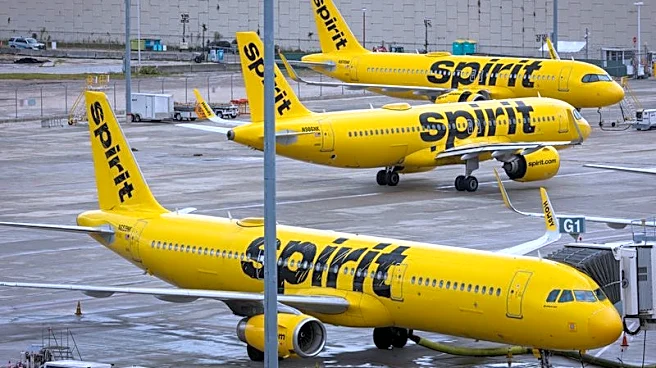
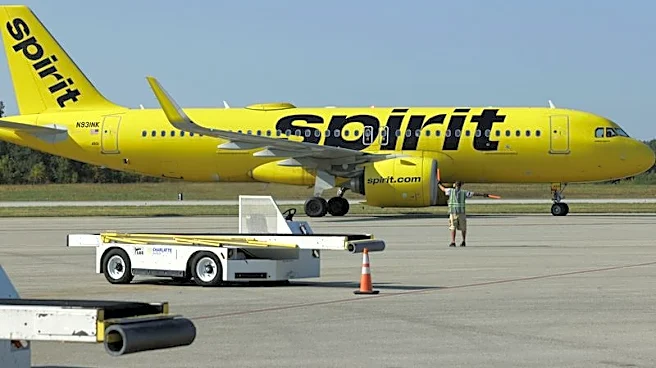
President Trump’s proposal to provide a $500 million bailout to Spirit Airlines has caused division within the Republican Party. The plan involves the government potentially acquiring a significant ownership stake in the airline, which has faced financial
difficulties due to rising fuel costs and previous bankruptcies. The proposal has sparked debate among Trump’s advisers and GOP members, with some supporting the move as a job-saving measure, while others criticize it as a departure from free-market principles. The administration is considering this targeted intervention as part of its response to economic challenges exacerbated by geopolitical tensions.
Why It's Important?
The proposed bailout represents a significant shift in government policy, moving towards direct investment in private companies. This approach challenges traditional Republican views on government intervention in the economy, leading to internal party conflicts. The decision could influence future government actions in other industries facing similar challenges, potentially altering the landscape of corporate-government relations. The outcome of this debate may also impact public perception of the administration’s economic strategies and its commitment to free-market principles.
What's Next?
The administration's decision on the bailout will likely face continued scrutiny from political leaders and industry stakeholders. If approved, the bailout could set a precedent for future government interventions in private businesses, particularly in sectors deemed critical to national interests. The debate may also influence upcoming policy discussions within the Republican Party, as members grapple with balancing economic intervention with traditional free-market ideals. The outcome could have lasting effects on the airline industry and broader economic policy.