










What's Happening?
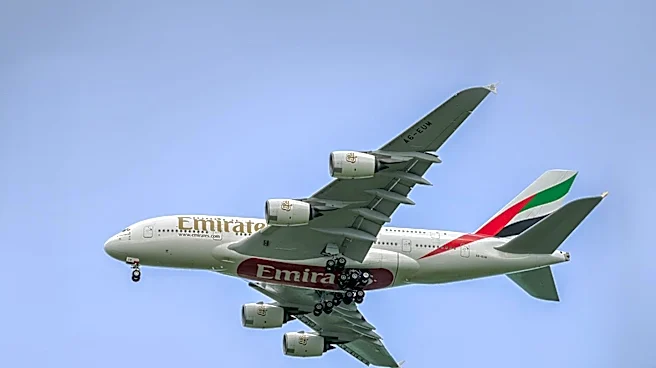
Emirates has introduced its first converted Boeing 777-300ER freighter, enhancing its SkyCargo division. This aircraft, modified under a program by Israel Aerospace Industries in partnership with AerCap, marks a significant step in Emirates' fleet expansion.
Originally a passenger jet delivered in 2006, the aircraft has been repurposed to meet the growing demand for air cargo. The conversion agreement, initiated in 2021 following a diplomatic pact between Israel and the UAE, involves modifying four 777-300ERs, with plans to receive five by 2027. The new freighter offers a payload capacity of 100 tons and 47 pallet positions, providing 25% more cargo volume than the existing 777F models.
Why It's Important?
The introduction of the converted 777-300ER freighters is crucial for Emirates as it seeks to optimize its fleet and meet increasing global cargo demands. This move not only enhances Emirates' operational agility but also signifies a strategic investment in expanding its cargo capabilities. The increased cargo volume capacity is expected to support the rapid transportation of goods worldwide, which is vital for maintaining supply chain efficiency. Additionally, this development reflects the growing trend of converting older passenger aircraft into freighters, a cost-effective solution for airlines to expand their cargo operations without purchasing new aircraft.
What's Next?
Emirates plans to continue expanding its cargo fleet, with additional 777Fs and converted 777-300ERs expected by the end of the year and into 2027. This expansion will likely enhance Emirates' competitive position in the global air cargo market. The airline's strategic focus on cargo capacity could lead to increased market share and influence in international logistics. Stakeholders, including logistics companies and global shippers, may respond positively to the increased capacity and efficiency, potentially leading to new partnerships and business opportunities.