


What's Happening?
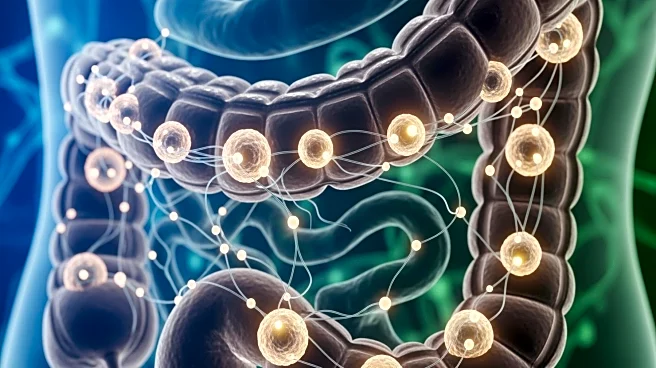
A recent study conducted by researchers at University College London has revealed how immune cells in the gut play a crucial role in the spread of Parkinson's disease to the brain. Parkinson's disease, a neurodegenerative disorder characterized by symptoms
such as tremors and stiffness, is believed to originate in the gut. The study, published in the Nature journal, highlights the role of gut macrophages, specialized immune cells, in transferring toxic proteins from the gut to the brain. By reducing the number of these macrophages, researchers observed a decrease in the spread of toxic proteins and improved motor symptoms in mice models. This discovery points to a potential therapeutic target for early intervention in Parkinson's disease.
Why It's Important?
The findings of this study are significant as they offer a new perspective on the early detection and management of Parkinson's disease. Understanding the role of gut immune cells in the disease's progression could lead to the development of blood tests for early diagnosis, potentially before brain damage occurs. This could revolutionize the approach to treating Parkinson's, allowing for interventions that prevent the disease from reaching the brain. The study also suggests that enhancing the function of these immune cells could slow or stop the disease's progression, offering hope for improved treatment strategies.
What's Next?
The study opens avenues for further research into therapeutic strategies targeting gut immune cells to prevent the spread of Parkinson's disease. Researchers may explore ways to boost the function of these cells to respond correctly and halt the disease's progression. Additionally, the development of diagnostic tests based on these findings could be pursued, aiming for early detection and intervention. The implications of this research could lead to significant advancements in the treatment and management of neurodegenerative diseases.
Beyond the Headlines
The study highlights the complex interplay between the gut and brain in neurodegenerative diseases, emphasizing the importance of the gut-brain axis in medical research. It also raises ethical considerations regarding early diagnosis and intervention, as well as the potential for personalized medicine approaches in treating Parkinson's disease. The findings could influence future research on other diseases with similar gut-brain connections, broadening the scope of neurodegenerative disease management.