



What's Happening?
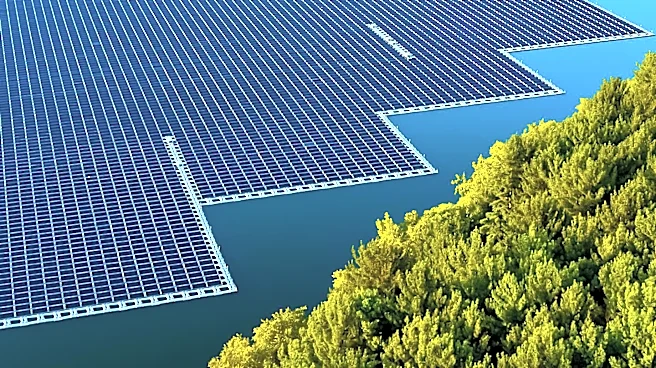
The city of Lima, Ohio, has officially brought online a 2-megawatt floating solar array at its Twin Lakes Reservoir. This four-acre installation consists of 3,120 solar panels and is designed to power Lima’s water treatment operations. The project makes
Lima home to the second-largest floating solar array in Ohio. The initiative is the culmination of a multi-year effort involving the city, D3Energy, and other partners. The primary goals are to generate clean electricity, reduce the city's energy costs, and preserve land that would otherwise be used for agriculture, housing, or other development. The array is projected to offset approximately 976 metric tons of carbon dioxide annually. Eric Bontrager, operations manager for the Lima Utilities Department, emphasized that using the reservoir allows the city to produce solar power without competing for valuable land resources.
Why It's Important?
The activation of Lima, Ohio's floating solar array represents a significant step in urban renewable energy adoption and offers a model for other U.S. communities facing land constraints. By utilizing existing water bodies like reservoirs, cities can overcome challenges associated with land availability for large-scale solar installations, which is crucial for expanding renewable energy infrastructure in densely populated or agriculturally rich areas. This project directly benefits Lima's water treatment plant, a major electricity consumer, by reducing operational costs and providing a stable, clean energy source. The projected annual offset of 976 metric tons of carbon dioxide contributes to national climate goals and demonstrates a practical approach to reducing municipal carbon footprints. The federal assistance, including a $2.4 million Department of Energy grant and nearly $900,000 in Inflation Reduction Act tax credits, highlights the role of government incentives in accelerating such innovative projects and making them financially viable for local governments.
What's Next?
Lima officials will now monitor the system's energy production, cost savings, and environmental benefits to assess its long-term performance and impact. The project is expected to serve as a case study for other U.S. communities, particularly those with similar water infrastructure and land limitations, demonstrating the feasibility and advantages of floating solar technology. D3Energy and other developers in the floating solar sector may see increased interest and demand for their solutions as more cities seek sustainable energy options. The success of this project could also influence future federal and state funding allocations for renewable energy, potentially prioritizing innovative approaches that maximize existing resources. Furthermore, the potential secondary benefits, such as reduced water evaporation and algae growth, will be closely observed, which could further enhance the appeal of floating solar arrays as a multi-functional infrastructure solution.
Beyond the Headlines
The Lima floating solar project subtly addresses several deeper implications beyond immediate energy production. Ethically, it represents a commitment to environmental stewardship by reducing carbon emissions and preserving natural landscapes, aligning with broader societal values of sustainability. Legally, the project navigates the complexities of utilizing public water resources for energy generation, potentially setting precedents for future infrastructure developments that integrate renewable energy with existing public utilities. Culturally, it challenges traditional notions of land use for energy, promoting a more integrated and efficient approach to resource management. In the long term, widespread adoption of floating solar could lead to significant shifts in urban planning and infrastructure development, encouraging cities to view their water bodies not just as resources for consumption or recreation, but also as viable platforms for clean energy generation. This could foster a new era of multi-purpose infrastructure that optimizes space and resources for environmental and economic benefits.