



What's Happening?
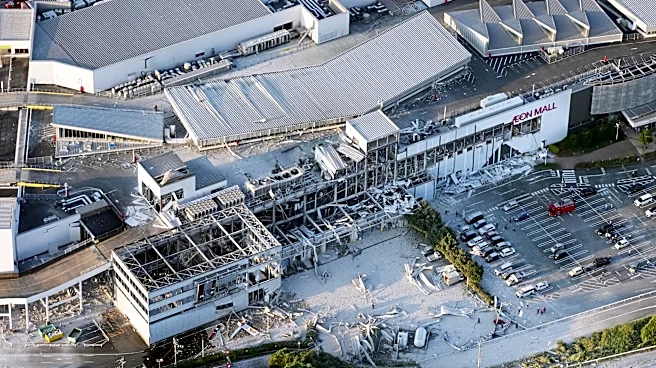
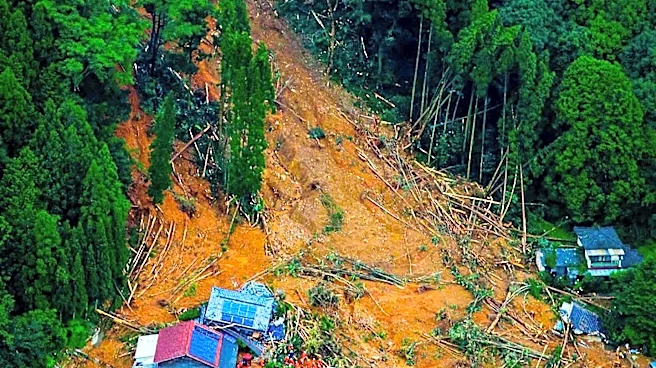
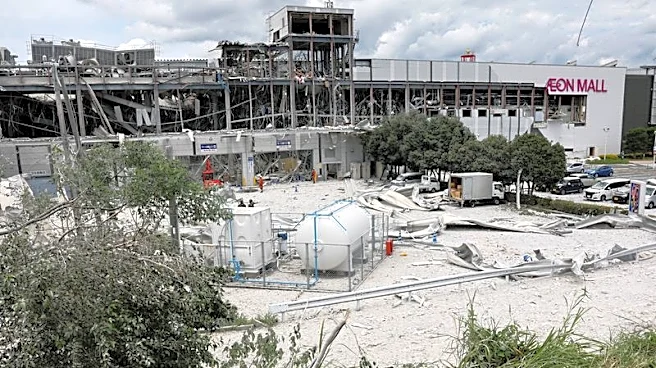
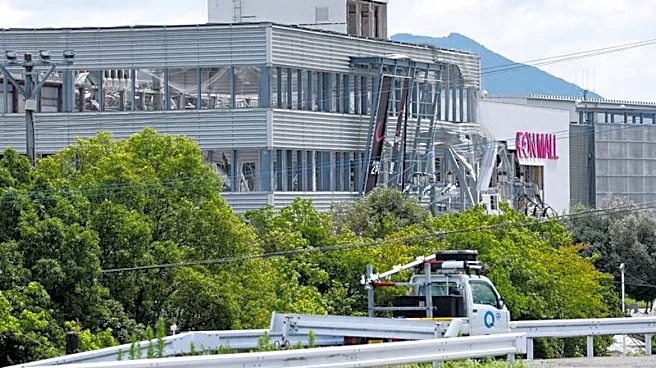
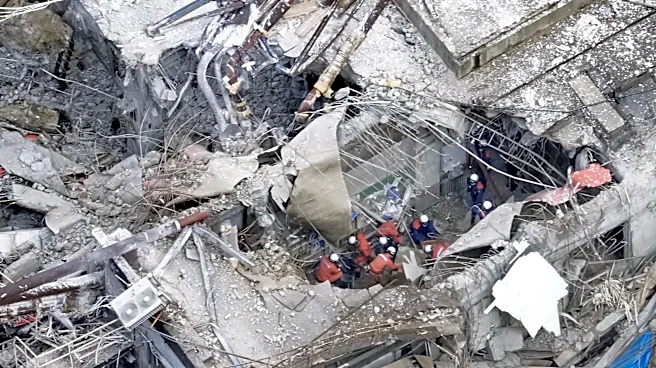
A powerful earthquake with a magnitude of 7.1 struck Kumamoto on Japan's southern main island of Kyushu, causing significant damage and injuries. The Japan Meteorological Agency issued a tsunami advisory, which was lifted within two hours. The earthquake led
to injuries, road and bridge damage, and power outages. A train derailed at Yatsushiro station, and the Kumamoto castle suffered damage. The Japanese government, led by Prime Minister Sanae Takaichi, has set up a task force to assess the situation and coordinate rescue operations. The U.S. Geological Survey later revised the earthquake's magnitude to 6.8.
Why It's Important?
This earthquake underscores the vulnerability of regions prone to seismic activity and the importance of preparedness and rapid response. The damage to infrastructure and the injuries reported highlight the potential for significant disruption in affected areas. The Japanese government's swift response and the lifting of the tsunami advisory demonstrate the effectiveness of their emergency protocols. For the U.S., this event serves as a reminder of the importance of international cooperation in disaster response and the need for robust emergency management systems.
What's Next?
In the coming days, Japanese authorities will continue to assess the full extent of the damage and prioritize the safety and recovery of affected residents. The focus will be on restoring infrastructure, providing medical care to the injured, and ensuring the safety of nuclear facilities. The international community may offer support and resources to aid in recovery efforts. Residents in the region are advised to remain cautious of potential aftershocks.