




What's Happening?
A Vermont activist, Nancy Braus, recounted her experiences traveling long distances in an electric vehicle (EV) to visit relatives in three cities, including locations outside of New England and New York. Despite owning an Ioniq5 with an estimated 290-mile
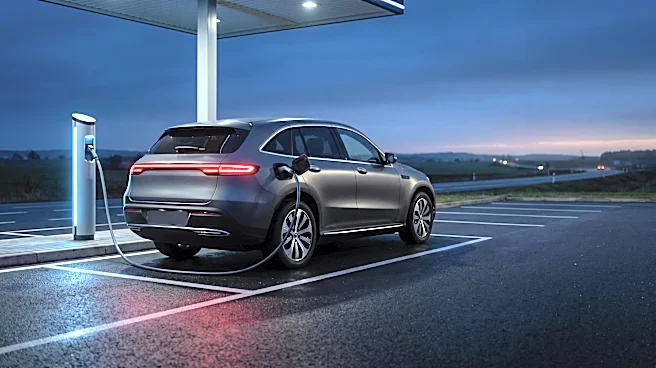
range, Braus discovered that actual range varies significantly based on factors like speed, weather, and use of heating or air conditioning. Her journey highlighted the complexities of the EV charging infrastructure, particularly the prevalence of Level 2 chargers requiring extended charging times and the often-depressing locations of high-speed chargers, such as Walmart parking lots or strip malls. A significant challenge encountered was a credit card scam at a charging station in Ithaca, New York, resulting in fraudulent charges and the need to replace credit cards.
Why It's Important?
This personal account sheds light on the current state and challenges of electric vehicle adoption and infrastructure in the U.S. While EVs are promoted as a sustainable transportation solution, the narrative reveals practical hurdles that could deter potential buyers, such as range anxiety, the inconvenience of charging station locations, and security risks associated with payment systems. The incident of credit card fraud underscores a less-discussed aspect of EV charging: the need for secure and reliable payment processing. For the U.S. automotive industry and policymakers, this experience provides valuable feedback on areas requiring improvement to accelerate EV transition, including expanding reliable high-speed charging networks and enhancing payment security.
What's Next?
The experience of this Vermont activist suggests a continued need for improvements in the U.S. EV charging infrastructure. This includes the development of more conveniently located and aesthetically pleasing charging stations, as well as the implementation of more secure and user-friendly payment systems to prevent fraud. Policymakers and industry stakeholders may need to address these issues to encourage broader EV adoption. Consumers considering long-distance EV travel will likely need to plan routes meticulously, research charging options, and remain vigilant about payment security until the infrastructure matures further. The activist's ultimate willingness to travel by EV again, despite the challenges, indicates a strong belief in the technology's future, provided these issues are resolved.
Beyond the Headlines
Beyond the practicalities of EV travel, this story touches on broader societal and technological shifts. The activist's observations about the disparity in charging infrastructure between well-traveled interstates and smaller towns reflect the uneven pace of technological adoption and investment across different regions of the U.S. The credit card fraud incident also highlights the evolving landscape of digital security risks as more aspects of daily life become digitized. Furthermore, the narrative implicitly critiques the slow pace of U.S. government support for EV infrastructure compared to other industrialized nations, suggesting a missed opportunity to lead in sustainable transportation. This personal journey underscores the blend of innovation and frustration that often accompanies the early stages of transformative technologies.