

What's Happening?
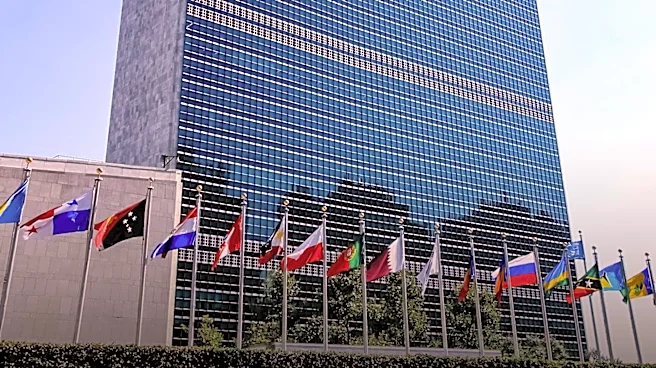
Helen Clark, former Prime Minister of New Zealand and former Administrator of the UN Development Programme, asserts that the international system and its institutions are under unprecedented strain, necessitating significant reform within the United Nations.
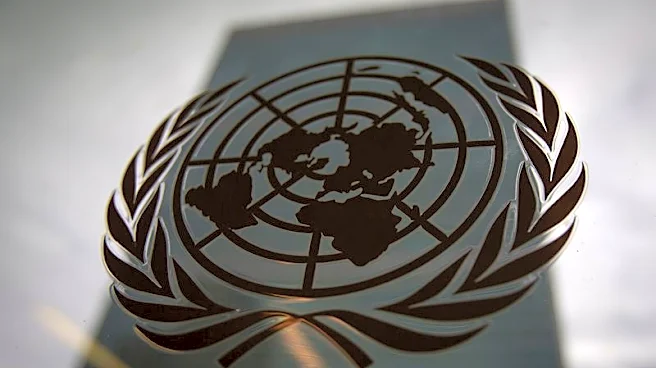
She criticizes the current UN80 reform process as being a rushed effort primarily focused on managing financial challenges, rather than adopting a more holistic and anticipatory approach. Clark highlights the UN's diminishing role in resolving global conflicts, noting that its last significant peacebuilding effort was in El Salvador in 1992. She advocates for a re-examination of the UN Charter itself, suggesting that a review conference, as outlined in Article 109 but never held, is long overdue. The Charter, written before the nuclear age, needs to be reimagined to address contemporary threats and challenges. Clark also emphasizes the need to expand the influence of global civil society within the UN, moving beyond its current 'we the member states' operational model to better reflect the 'We the People' opening of the Charter. She warns that if the UN fails to adapt, non-democratic and authoritarian governments may build parallel institutions, potentially undermining the rules-based international order.
Why It's Important?
The call for comprehensive UN reform by a figure like Helen Clark underscores a critical juncture for global governance and its implications for U.S. foreign policy and international stability. A weakened or ineffective UN could lead to a more fragmented and less predictable global landscape, potentially increasing the burden on individual nations, including the U.S., to address international crises. The U.S. has historically been a significant contributor to and beneficiary of the UN's framework for peace and security. If the UN's capacity for conflict resolution continues to wane, it could necessitate greater direct U.S. intervention in global hotspots, with associated financial and human costs. Furthermore, the potential emergence of parallel institutions by non-democratic states could challenge U.S. influence and the liberal international order it has largely championed. The debate over the UN's financial health and the allocation of resources for peacekeeping, as highlighted by Clark, directly impacts the effectiveness of missions that often align with U.S. strategic interests in promoting stability and preventing humanitarian crises. The U.S. also stands to lose if global civil society's voice remains marginalized, as it could hinder broader international cooperation on issues like human rights and sustainable development.
What's Next?
The ongoing discussions around UN reform, particularly the UN80 process, are expected to continue, with calls for a more comprehensive and less financially driven approach. Helen Clark's advocacy for a review conference of the UN Charter, as per Article 109, suggests a potential long-term goal for a fundamental re-evaluation of the organization's foundational document. This could lead to significant debates among member states regarding the UN's structure, powers, and its role in a multipolar world. There will likely be continued pressure to address the UN's financial challenges, which could involve renewed calls for member states, including the U.S., to fulfill their assessed contributions. The emphasis on expanding civil society's influence within the UN framework could lead to proposals for new mechanisms or increased access for non-governmental organizations. Additionally, the concern about non-democratic states forming parallel institutions may prompt democracies to accelerate efforts to strengthen multilateralism and reform existing international bodies to maintain their relevance and effectiveness.
Beyond the Headlines
The deeper implications of the UN's current state and the push for reform extend to the very nature of global cooperation and the future of multilateralism. The critique that the UN operates as 'we the member states' rather than 'We the People' highlights a fundamental tension between state sovereignty and the broader aspirations of global citizenship. This ethical dimension questions whether the UN, in its current form, can truly represent and serve the interests of all humanity, especially in an era of transnational challenges like climate change, pandemics, and artificial intelligence. The call for a re-examination of the UN Charter, written before the nuclear age, underscores the profound legal and philosophical challenge of adapting an eighty-year-old framework to rapidly evolving global realities. The potential for non-democratic states to create alternative international structures could lead to a bifurcated global order, where different sets of rules and norms govern international relations, potentially exacerbating geopolitical tensions and making collective action on global issues even more difficult. This shift could fundamentally alter the balance of power and influence in international affairs, with long-term consequences for global peace and security.