



What's Happening?
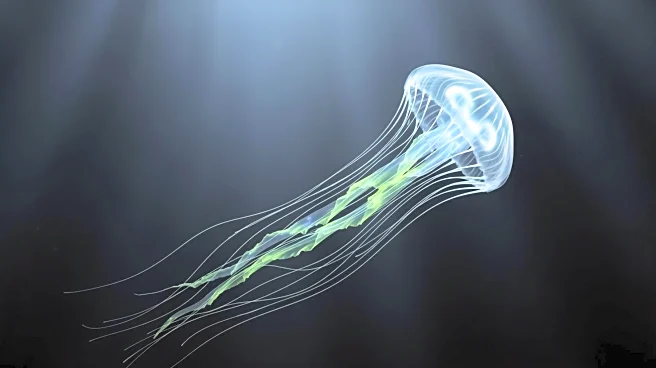
Scientists from the Schmidt Ocean Institute have discovered a rare giant phantom jellyfish, Stygiomedusa gigantea, off the coast of Argentina. This discovery was made during an exploration of the Colorado-Rawson submarine canyon wall using a remotely
operated vehicle. The jellyfish, which can grow over 20 feet long with a bell measuring over 3 feet across, was captured in mesmerizing footage by the autonomous submersible ROV SuBastian. The giant phantom jellyfish is known for its unique method of capturing prey using its four ribbon-like oral arms, rather than stinging. This species is exceedingly rare, with only about 118 sightings over the past 110 years, and is believed to inhabit every ocean except the Arctic, at depths of up to 22,000 feet. The expedition also led to the discovery of 28 suspected new species and several rich reef systems, including the largest-known Bathelia candida coral reef.
Why It's Important?
The discovery of the giant phantom jellyfish and other new species highlights the rich biodiversity of deep-sea ecosystems and underscores the importance of ocean exploration. These findings provide valuable insights into the unique and often vulnerable ecosystems that exist in the deep sea. Understanding these ecosystems is crucial for conservation efforts and for assessing the impacts of human activities such as deep-sea mining and climate change. The research conducted by the Schmidt Ocean Institute contributes to the broader scientific understanding of marine biodiversity and the ecological connections within oceanic environments. This knowledge is essential for developing strategies to protect these ecosystems and ensure their sustainability for future generations.
What's Next?
The samples collected during this expedition will be used for further research to understand the chemical, physical, and biological connections in the ocean. This research will help scientists gain a deeper understanding of the extreme ecosystems found in the deep sea and their vulnerabilities. The findings may influence future conservation policies and strategies aimed at protecting these unique marine environments. Additionally, the discovery of new species could lead to further scientific exploration and potentially new insights into marine biology and ecology.
Beyond the Headlines
The discovery of the giant phantom jellyfish and other new species raises questions about the potential for undiscovered biodiversity in the deep sea. It highlights the need for continued exploration and research to uncover the mysteries of the ocean. The findings also emphasize the importance of international collaboration in scientific research, as understanding and protecting the ocean is a global responsibility. The expedition's success demonstrates the value of advanced technology, such as remotely operated vehicles, in exploring and studying inaccessible parts of the ocean.