



What's Happening?
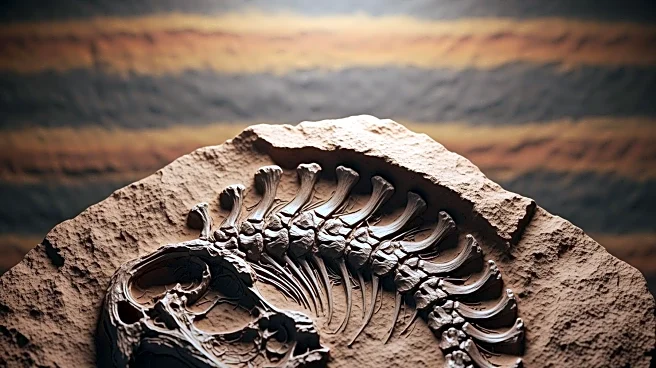
In the Hațeg Basin of Transylvania, a newly studied site has revealed an exceptional concentration of dinosaur fossils, with more than 100 vertebrate fossils per square meter. The Valiora Dinosaur Research Group, consisting of Hungarian and Romanian paleontologists,
has been conducting fieldwork in the region for over five years. The site, known as K2, has yielded over 800 vertebrate fossils, including partial skeletons of two plant-eating dinosaur species. This discovery provides a rare glimpse into the Late Cretaceous period, offering insights into the ancient ecosystems and the evolutionary history of dinosaurs in the region.
Why It's Important?
The discovery of such a dense concentration of dinosaur fossils in Transylvania is significant for paleontological research. It provides a unique opportunity to study the composition and evolution of dinosaur communities in Europe during the Late Cretaceous. The findings could lead to a better understanding of how these ancient ecosystems functioned and how they were affected by environmental changes. This research not only enhances scientific knowledge but also has the potential to attract further academic interest and tourism to the region, contributing to its cultural and economic development.