








What's Happening?
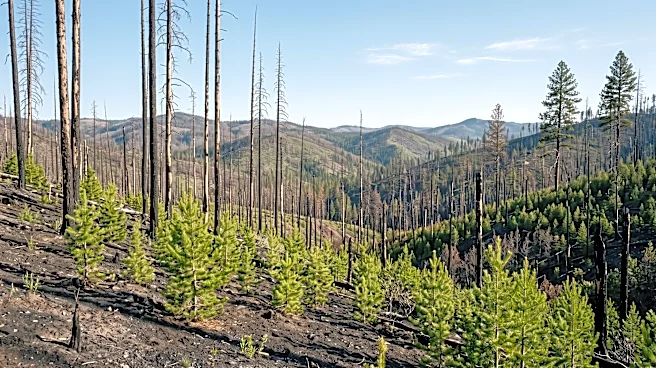
An American Forest Management forestry crew has significantly contributed to post-fire recovery and forest health initiatives within the Sawtooth National Forest. Their work included identifying approximately 100 lodgepole pine seed trees, conducting
natural regeneration surveys across 17,000 acres, and laying out over 300 acres for tree-planting units. These efforts are part of broader forest management activities aimed at restoring areas affected by wildfires and enhancing the forest's resilience. The Sawtooth National Forest also engaged other groups, such as the Idaho Conservation Corps and volunteers, in timber sale preparation and other conservation tasks. These activities are crucial for maintaining the ecological balance and infrastructure of the national forest, especially in the wake of fire events.
Why It's Important?
The involvement of American Forest Management and other organizations in the Sawtooth National Forest underscores a critical approach to managing U.S. national forests, particularly in regions prone to wildfires. Post-fire recovery is vital for ecological restoration, preventing erosion, and re-establishing wildlife habitats. The identification of seed trees and natural regeneration surveys are foundational steps for successful reforestation, ensuring the long-term health and biodiversity of the forest. Furthermore, these efforts contribute to mitigating future wildfire risks by promoting healthier forest stands. The collaboration between private entities like American Forest Management and public agencies highlights a growing trend in leveraging diverse resources to address complex environmental challenges facing federal lands.
What's Next?
The ongoing post-fire recovery efforts in the Sawtooth National Forest are expected to continue with further reforestation and vegetation management projects. The contract for planting has been awarded and is scheduled to begin in October, with an additional 174,000 seedlings already sown for future plantings. Work is also underway for post-fire range fence reconstruction and noxious weed treatments. These initiatives will be complemented by continued National Environmental Policy Act (NEPA) analyses for various projects, ensuring environmental considerations are integrated into future plans. The focus will also shift to winterization of developed sites and preparing for the winter season, with employees continuing field work as weather permits.
Beyond the Headlines
The work in the Sawtooth National Forest reflects a broader national strategy to enhance forest resilience against climate change and increasing wildfire severity. Beyond immediate recovery, these efforts contribute to carbon sequestration, a key component in national climate goals. The emphasis on natural regeneration and strategic tree planting helps maintain the genetic diversity of forest ecosystems, making them more adaptable to changing environmental conditions. This collaborative model, involving private companies, conservation corps, and volunteers, could serve as a blueprint for managing other national forests across the U.S., fostering a more integrated and sustainable approach to land stewardship and disaster recovery.