



What's Happening?
Recent reports highlight the practical use of artificial intelligence (AI) in spacecraft, focusing on solving specific operational challenges rather than making autonomous decisions akin to human judgment. Current AI applications in space missions are
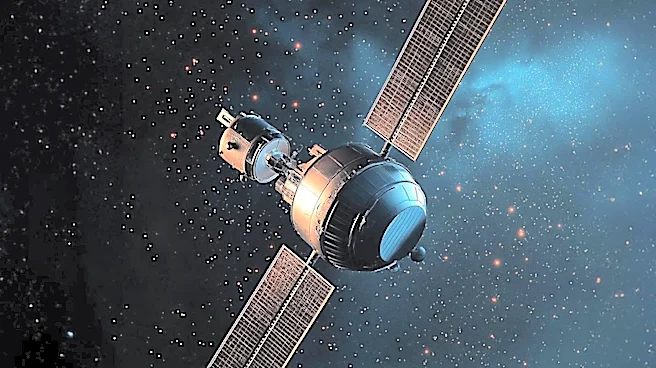
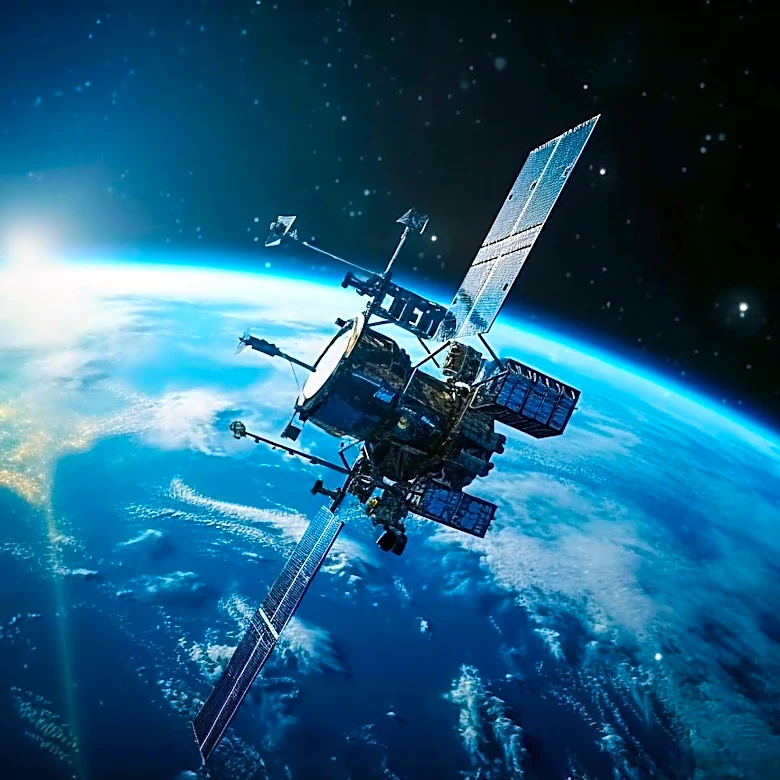
designed to address constraints such as communication delays, bandwidth limitations, and the sheer volume of data. For instance, NASA's Curiosity rover uses AI software called AEGIS to autonomously select laser targets on Mars, improving target accuracy significantly. Similarly, small Earth observation satellites employ AI to filter out unusable images, optimizing data transmission. These applications demonstrate AI's role in enhancing efficiency by automating routine tasks and decision-making processes.
Why It's Important?
The integration of AI in space missions represents a significant advancement in managing the increasing complexity and volume of space operations. By automating specific tasks, AI reduces the need for constant human intervention, allowing for more efficient use of resources and time. This is particularly crucial as the number of active satellites and space missions continues to grow, necessitating more autonomous systems to handle routine operations. The ability of AI to operate independently in space environments also paves the way for more ambitious missions, potentially expanding the scope of exploration and data collection.
What's Next?
As AI technology continues to evolve, its role in space missions is expected to expand. Future developments may include more sophisticated AI systems capable of handling a broader range of tasks autonomously. This could lead to more complex missions with less reliance on Earth-based control, enabling deeper space exploration. Additionally, the success of current AI applications may encourage further investment in AI research and development, potentially leading to breakthroughs that could transform space operations.