






What's Happening?
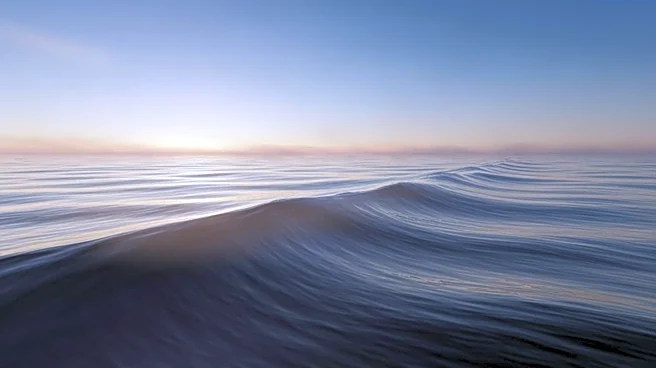
Scientists at MIT have developed a new wave model, named 'PlanetWaves,' which predicts that gentle winds on Saturn's moon Titan can generate waves as high as 10 feet. This model is the first to capture the full dynamics of wave formation under various
planetary conditions, including different gravity, atmospheric pressure, and liquid compositions. The research, published in the Journal of Geophysical Research: Planets, suggests that Titan's low gravity and atmospheric pressure, combined with its light liquid hydrocarbons, make it surprisingly easy for large waves to form. The model was tested using Earth's wave data from Lake Superior and applied to predict wave behavior on other planetary bodies, including ancient Mars and several exoplanets.
Why It's Important?
The development of the 'PlanetWaves' model is significant as it enhances our understanding of wave dynamics on other planetary bodies, which could have implications for future space exploration and the design of spacecraft. Understanding wave behavior on Titan is particularly important because it is the only other body in the solar system known to host liquid lakes. This model could inform the design of wave-resilient probes for future missions to Titan. Additionally, the model provides insights into the geological history of planets like Mars, where wave activity may have shaped landscapes. The ability to predict wave behavior on exoplanets also opens new avenues for studying their environments and potential habitability.
What's Next?
The next steps involve further refining the model and applying it to more planetary bodies to understand their wave dynamics better. Researchers may also use the model to explore the potential for wave-driven landscape formation on Titan and other planets. Future missions to Titan could use this model to design probes capable of withstanding its wave conditions. Additionally, the model could be used to study the impact of waves on the geological features of planets like Mars, providing insights into their past climates and atmospheres.
Beyond the Headlines
The 'PlanetWaves' model challenges our understanding of wave dynamics by considering factors like liquid composition and atmospheric pressure, which are often overlooked. This approach could lead to new discoveries about the role of waves in shaping planetary landscapes. The model also highlights the potential for waves to influence the distribution of sediments and the formation of coastal features on other planets, offering a new perspective on planetary geology. Furthermore, the model's application to exoplanets could help identify those with conditions similar to Earth, aiding in the search for extraterrestrial life.