









What's Happening?
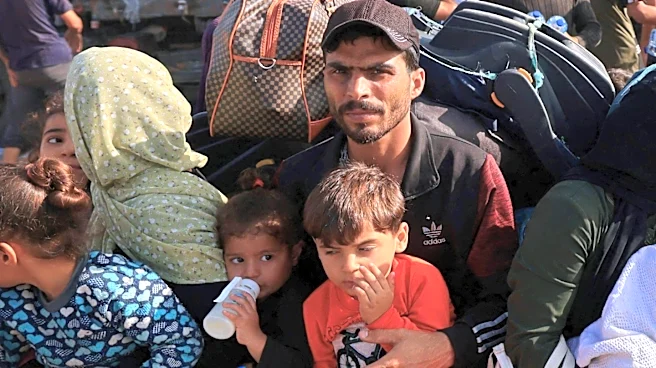
The European Union's new Pact on Migration and Asylum aims to manage migration through regulated and manageable arrivals, including a holistic screening process and procedural guarantees. However, Spain has struggled to implement these provisions due
to the overwhelming number of arrivals, exemplified by a recent influx of 72,000 people at its borders. The situation highlights the EU's difficulty in handling mass arrivals and the limitations of current infrastructure and policies. Despite the pact's intentions, Spain's inability to accommodate such numbers under humane conditions has exposed significant operational weaknesses.
Why It's Important?
The challenges faced by Spain in implementing the EU's migration pact underscore the broader issues of migration management within the EU. The situation reveals the limitations of current policies in addressing large-scale migration and the need for more robust and flexible mechanisms. The inability to manage such arrivals effectively poses risks to national security and social cohesion, not only for Spain but for the EU as a whole. This situation may prompt a reevaluation of the EU's migration strategies and the development of more comprehensive solutions.
What's Next?
The EU may need to consider revising its migration policies to better address the realities of mass arrivals. This could involve enhancing infrastructure, increasing cooperation among member states, and developing new strategies to prevent the instrumentalization of migration for geopolitical purposes. The ongoing situation will likely lead to further discussions and potential policy changes at the EU level, as member states seek to balance humanitarian responsibilities with national security concerns.