








What's Happening?
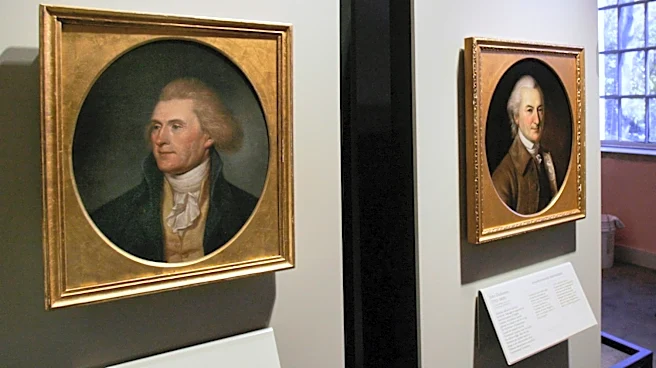
As the United States approaches the 250th anniversary of the Declaration of Independence, renewed attention is being given to the personal life of Thomas Jefferson, the third President of the United States and principal author of the Declaration. Jefferson's
relationship with Sally Hemings, an enslaved woman at his Monticello estate, is under intense scrutiny. Historians now widely acknowledge that Hemings bore six of Jefferson's children, a fact supported by DNA evidence. This relationship, once denied for over 150 years, is now openly discussed during tours at Monticello, which has become a focal point for visitors interested in Jefferson's legacy. The estate offers guided tours that explore the daily lives of slaves and the complex history of Jefferson's time, including his contributions to American independence and his personal contradictions as a slave owner.
Why It's Important?
The renewed focus on Thomas Jefferson's personal life highlights the ongoing national conversation about the legacy of the Founding Fathers and the contradictions between their public ideals and private lives. Jefferson's relationship with Sally Hemings raises important questions about power dynamics and consent, given the context of slavery. This scrutiny is part of a broader reassessment of historical figures and their impact on contemporary society. The discussions at Monticello and similar historical sites contribute to a deeper understanding of American history, encouraging a more nuanced view of the past. This can influence public policy and educational curricula, as society grapples with the complexities of its founding narratives and the implications for racial and social justice today.
What's Next?
As the anniversary of the Declaration of Independence approaches, Monticello and other historical sites are likely to see increased visitor numbers, prompting further public engagement with Jefferson's legacy. The Thomas Jefferson Foundation, which manages Monticello, may continue to expand its educational programs and exhibits to address these complex historical narratives. Additionally, the broader historical community may see increased interest in research and publications that explore the lives of enslaved individuals and their descendants. This could lead to more comprehensive historical accounts and potentially influence how American history is taught in schools, fostering a more inclusive understanding of the nation's past.
Beyond the Headlines
The examination of Thomas Jefferson's personal life and his relationship with Sally Hemings also touches on broader ethical and cultural dimensions. It challenges the traditional hero narratives often associated with the Founding Fathers, prompting a reevaluation of what it means to honor historical figures. This scrutiny may lead to discussions about how public monuments and historical sites represent complex legacies, potentially influencing debates over the removal or reinterpretation of statues and memorials. Furthermore, it highlights the importance of acknowledging and preserving the stories of marginalized groups in historical narratives, contributing to a more equitable representation of history.