





What's Happening?
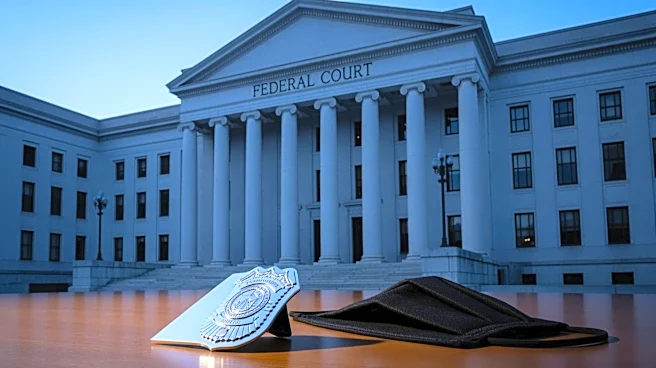
The U.S. Department of Justice has filed a lawsuit against the state of Connecticut, Governor Ned Lamont, and Attorney General William Tong over a new state law. This law prohibits federal agents from wearing masks and mandates them to display identification
while operating in Connecticut. The legislation, passed by the Connecticut General Assembly and signed by Governor Lamont, designates 'protected areas' such as schools and hospitals where arrests cannot be made solely on civil offenses like immigration violations. The federal government argues that the law is unconstitutional, citing the Supremacy Clause, which prioritizes federal law over state law. Connecticut officials, however, maintain that the law is necessary for public safety and is within the state's rights.
Why It's Important?
This legal battle highlights the ongoing tension between state and federal authorities over immigration enforcement and public safety measures. The outcome of this lawsuit could set a precedent for how states can regulate federal law enforcement activities within their borders. If Connecticut's law is upheld, it may encourage other states to enact similar legislation, potentially leading to a patchwork of state laws that complicate federal enforcement efforts. Conversely, if the law is struck down, it could reinforce federal authority and limit states' ability to impose restrictions on federal agents, impacting how immigration laws are enforced nationwide.
What's Next?
The case is likely to proceed through the courts, with both sides preparing for a potentially lengthy legal battle. Connecticut officials have expressed their intent to defend the law vigorously, while the Justice Department may seek a preliminary injunction to halt the law's enforcement during the litigation. The decision could be appealed to higher courts, possibly reaching the Supreme Court, given its implications for federal-state relations. Stakeholders, including civil rights groups and law enforcement agencies, will be closely monitoring the case for its broader impact on immigration policy and state sovereignty.