





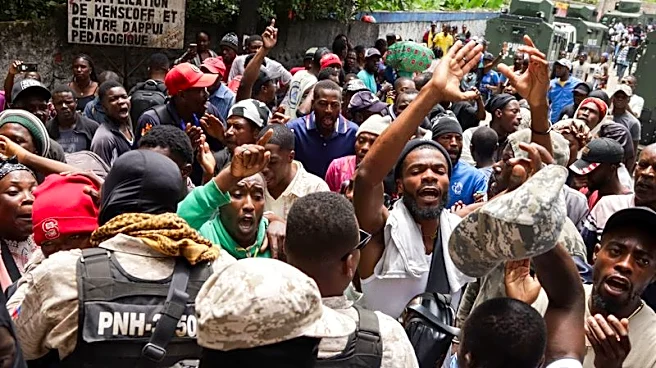

What's Happening?
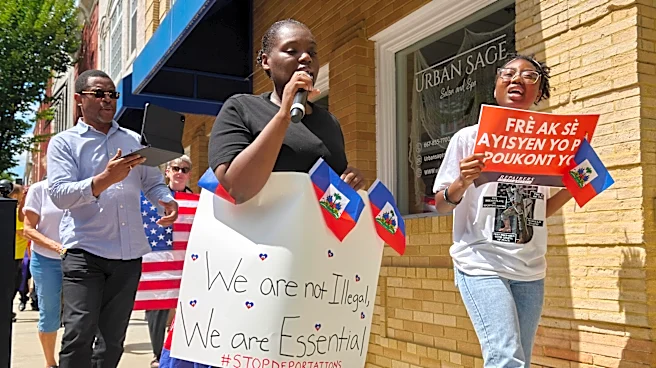
The Trump administration is intensifying its efforts to deport approximately 350,000 Haitians from the United States, following the termination of their Temporary Protected Status (TPS). The Department of Homeland Security (DHS) publicly stated that individuals
with terminated TPS are in the U.S. illegally and must either leave immediately or face deportation. This escalation includes deportation flights carrying families, some with U.S.-born children, back to Haiti. Haiti is currently experiencing a severe humanitarian crisis, marked by widespread violence, gang control, and limited healthcare, prompting the U.S. State Department to issue a 'Do Not Travel' advisory for American citizens. Despite these conditions, the administration proceeded with ending TPS protections after receiving Supreme Court approval in June, following an initial attempt last year.
Why It's Important?
The mass deportation of Haitians to a country in crisis raises significant humanitarian and ethical concerns. The U.S. State Department's own travel advisory for Haiti underscores the dangers faced by those being returned, including crime, terrorism, kidnapping, and a lack of essential services. This policy directly impacts hundreds of thousands of individuals who have built lives in the U.S., many for years, and now face an uncertain and perilous future. The deportations also affect U.S.-born children, creating complex family separations and potentially leaving young citizens in a dangerous foreign environment. This aggressive stance on immigration, coupled with a surge in ICE arrests, signals a broader crackdown that increasingly targets individuals with only civil immigration violations, rather than criminal records, shifting the focus of immigration enforcement.
What's Next?
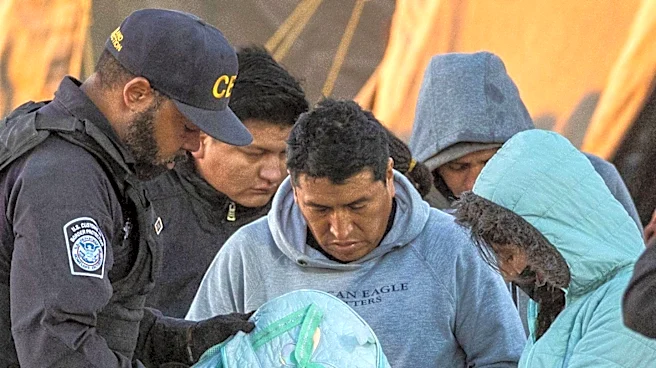
The Trump administration's immigration crackdown is expected to continue, with Immigrations and Customs Enforcement (ICE) aiming for higher arrest quotas. Data from the Deportation Data Project at UC Berkeley and UCLA indicates a record number of arrests in recent months, with a growing proportion of arrestees having no criminal record. ICE's increased budget and personnel suggest a sustained effort to expand enforcement. The focus on individuals with active immigration cases, such as those seeking asylum or green cards, indicates that legal status is becoming increasingly precarious for many. The ongoing crisis in Haiti means that those deported will face extreme challenges upon return, likely exacerbating humanitarian issues both domestically and internationally. Advocacy groups and legal organizations are expected to continue challenging these policies and providing support to affected communities.
Beyond the Headlines
The Trump administration's approach to Haitian TPS holders highlights a contentious aspect of U.S. immigration policy: the balance between national security, humanitarian concerns, and the legal framework of temporary protections. The public messaging from DHS, including social media posts with videos of chained immigrants set to 'cheery music,' reflects a deliberate strategy to project a tough stance on immigration, which can be seen as dehumanizing by critics. This policy also brings to light the broader implications of ending TPS for other nationalities, potentially setting a precedent for similar actions. The increase in ICE's budget and its internal arrest targets suggest a systemic shift towards more aggressive and widespread immigration enforcement, raising questions about civil liberties and due process for non-citizens in the U.S.