








What's Happening?
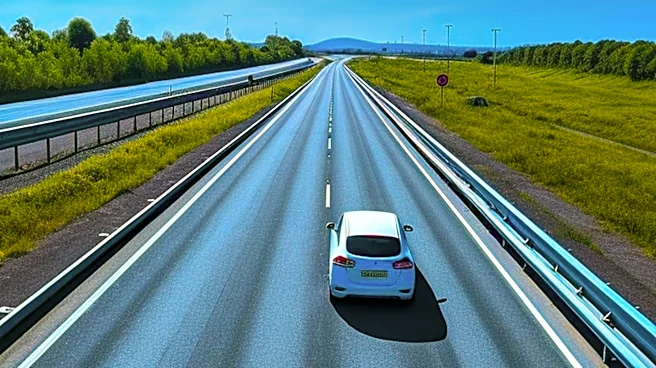
A recent study published in the journal Communications Sustainability highlights that speeding during car trips in the U.S. saves drivers an average of only 54 seconds per trip, while significantly increasing fuel costs and emissions. Researchers from
the University of Minnesota analyzed 120 million vehicle trips, finding that 43% included speeding, which accounted for nearly 12% of driving time. The study suggests that adhering to speed limits could save $22 million in fuel costs, 6.7 million gallons of fuel, and reduce carbon emissions by 57,000 metric tonnes daily. The research also noted variations in speeding habits across different states, with Nevada showing high prevalence and excess speeds.
Why It's Important?
The findings underscore the potential economic and environmental benefits of reducing speeding. By adhering to speed limits, drivers could collectively save millions of dollars and significantly cut down on fuel consumption and emissions, contributing to environmental sustainability. This is particularly relevant as gas prices remain high, impacting household budgets. The study also suggests that slower driving could influence oil market demand, potentially affecting fuel prices. The research highlights a simple yet effective strategy for improving fuel efficiency and reducing environmental impact, which could be crucial as the U.S. continues to grapple with climate change and energy consumption challenges.
What's Next?
While the study provides compelling data, its real-world application may face challenges. Changes in driving behavior could impact traffic patterns and efficiency, requiring further analysis. Additionally, as electric vehicle adoption increases, the dynamics of fuel savings and emissions reductions may shift. Policymakers and environmental advocates might use this data to promote campaigns encouraging adherence to speed limits. Future research could explore the broader implications of reduced speeding on traffic congestion and road safety.