





What's Happening?
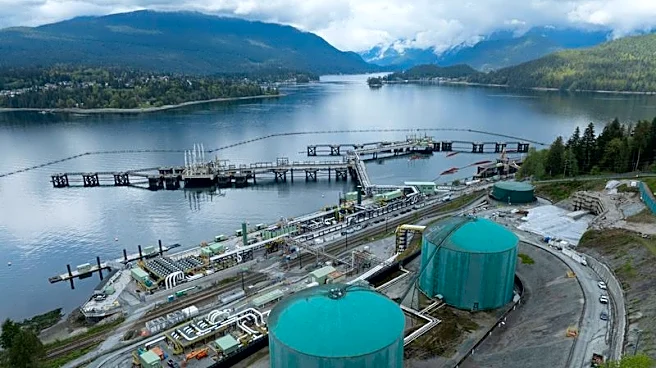
President Trump has announced a three-day postponement of new 50% tariffs on a range of Canadian products, which were set to take effect. This decision was made to allow for negotiations with Canada regarding the Keystone XL oil pipeline project. The
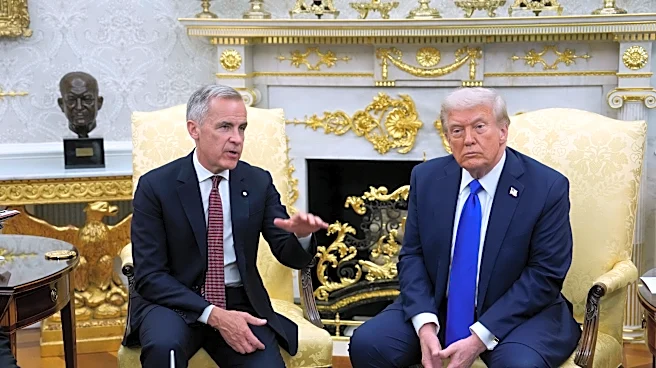
tariffs, initially announced in July, targeted Canadian wine, hockey sticks, furniture, dairy products, and other goods. Negotiations between the two countries continued until the last minute, with President Trump speaking with Canadian Prime Minister Mark Carney. Carney acknowledged significant progress but also noted that further work is needed to reach an agreement. The Keystone XL project, which involves a 1900-kilometer extension of the existing Keystone Pipeline from Alberta, Canada, to the U.S. Gulf Coast, was previously blocked by President Trump's democratic predecessor, Joe Biden, and abandoned by operators and the Alberta government in June 2021 due to environmental concerns. President Trump has long expressed a desire to revive the project despite these objections.
Why It's Important?
This development is significant for U.S.-Canada trade relations and energy policy. The imposition of tariffs, even if postponed, highlights ongoing trade tensions between the two neighboring countries. The potential revival of the Keystone XL pipeline project could have substantial economic implications for the U.S. energy sector, potentially increasing oil supply and impacting energy prices. However, it also reignites environmental debates and opposition from climate advocacy groups. For Canada, the tariffs represent a threat to various industries, while the pipeline project could offer economic benefits. The negotiations underscore the complex interplay between trade, energy security, and environmental considerations in U.S. foreign policy. The fact that these tariffs would have affected goods covered by the North American Free Trade Agreement (NAFTA) also raises questions about the future of regional trade agreements and their enforcement.
What's Next?
Over the next three days, U.S. and Canadian negotiators will focus on reaching a deal for the Keystone XL pipeline project. The outcome of these discussions will determine whether the tariffs are permanently averted or if they will be implemented after the postponement period. Prime Minister Carney's statement about significant progress suggests a willingness from both sides to find a resolution, but also indicates that challenges remain. Stakeholders, including environmental groups, energy companies, and affected industries in both countries, will be closely monitoring the negotiations. The broader implications for the North American Free Trade Agreement, which the U.S. has been reluctant to extend for 16 years, will also be a key area of focus, as the current agreement continues to be renewed annually unless explicitly withdrawn by a member country.
Beyond the Headlines
The push to revive the Keystone XL pipeline project goes beyond immediate trade disputes, touching upon deeper ideological divides regarding energy policy and environmental protection. President Trump's consistent interest in the project reflects a broader strategy to prioritize energy independence and fossil fuel development, often in contrast to environmental regulations. This approach has long-term implications for the U.S.'s commitment to climate change initiatives and its international standing on environmental issues. The negotiation also highlights the leverage that trade measures can provide in achieving broader policy objectives. Furthermore, the involvement of a project previously deemed defunct by a prior administration underscores the potential for significant policy shifts with changes in political leadership, creating uncertainty for long-term infrastructure and environmental planning.