




What's Happening?
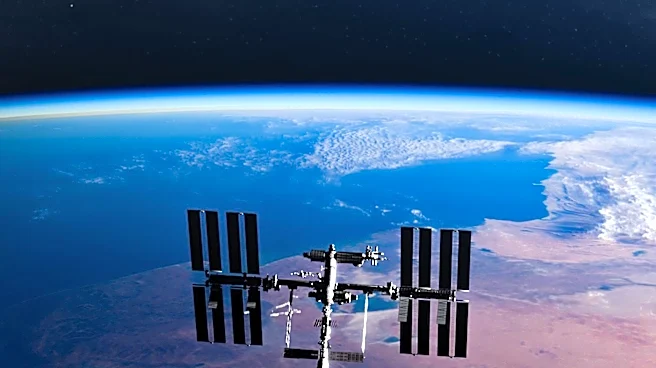
Axiom Space has announced a collaboration with Exobiosphere, a company focused on drug discovery, to leverage the unique microgravity environment of space for pharmaceutical research. This partnership aims to accelerate the development of new drugs by
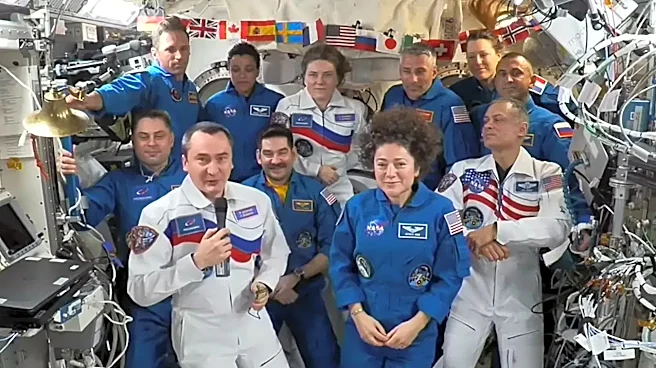
utilizing the International Space Station (ISS) as a research platform. Concurrently, Axiom Space continues to expand its private astronaut missions to the ISS, notably with the participation of Türkiye's first astronaut, Alper Gezeravci, on Axiom Mission 3. This mission underscores the growing international interest and cooperation in space exploration, with Türkiye and Italy actively collaborating in this domain. Axiom Space is also progressing with its ambitious plans to construct its own commercial space station, a significant step towards establishing a sustainable space economy before the anticipated retirement of the ISS. This initiative positions Axiom Space as a key player in the burgeoning private space sector, contributing to the broader competition among various entities to create a robust space economy.
Why It's Important?
This development is significant for several reasons. The partnership with Exobiosphere highlights the increasing commercialization of space for scientific and medical advancements. Utilizing microgravity for drug discovery could lead to breakthroughs in understanding disease mechanisms and developing more effective treatments, potentially impacting global health. The inclusion of international astronauts like Alper Gezeravci on private missions signifies a broadening of access to space beyond traditional government-led programs, fostering international collaboration and inspiring new generations in space exploration. Axiom Space's pursuit of its own space station is a critical step towards ensuring continued human presence in low-Earth orbit and beyond, especially as the ISS approaches its end-of-life. This private sector initiative could drive innovation, reduce costs, and create new economic opportunities in space, contributing to the long-term viability and expansion of the space economy. The competition among private companies to establish space infrastructure is crucial for diversifying space capabilities and reducing reliance on single entities.
What's Next?
In the immediate future, Axiom Space and Exobiosphere will likely begin specific research projects on the ISS, focusing on drug discovery experiments that benefit from microgravity. Further private astronaut missions are expected, potentially involving more nations and diverse research objectives. Axiom Space will continue the development and construction of its commercial space station modules, with initial deployments anticipated in the coming years. This will involve significant engineering, manufacturing, and launch activities. The success of these endeavors will likely influence future investment in private space infrastructure and research. Additionally, the ongoing collaboration between Türkiye and Italy in space exploration may lead to further joint missions or technological developments. The broader space industry will be watching these developments closely as they contribute to the evolving landscape of commercial space operations and the establishment of a sustainable space economy.
Beyond the Headlines
Beyond the immediate scientific and commercial implications, Axiom Space's activities represent a fundamental shift in how humanity accesses and utilizes space. The transition from purely government-led space endeavors to a more robust private sector involvement opens up new ethical and regulatory considerations. Questions regarding the governance of private space stations, intellectual property rights for discoveries made in space, and equitable access to space resources will become increasingly pertinent. The rise of private space stations could also lead to new models of international cooperation and competition, potentially altering geopolitical dynamics in space. Furthermore, the commercialization of space for drug discovery raises ethical questions about the accessibility and affordability of space-derived medical breakthroughs. The long-term vision of a thriving space economy necessitates careful consideration of these complex issues to ensure that space exploration benefits all of humanity.