



What's Happening?
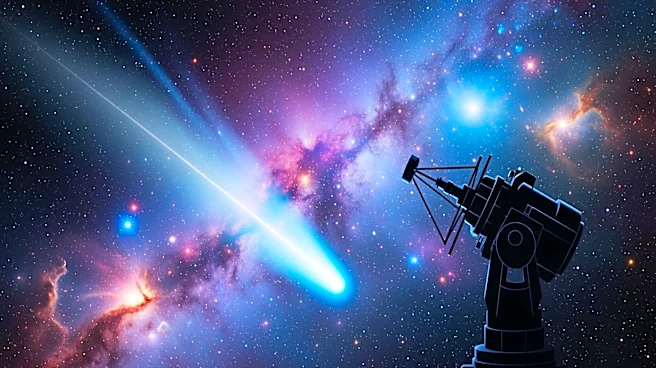
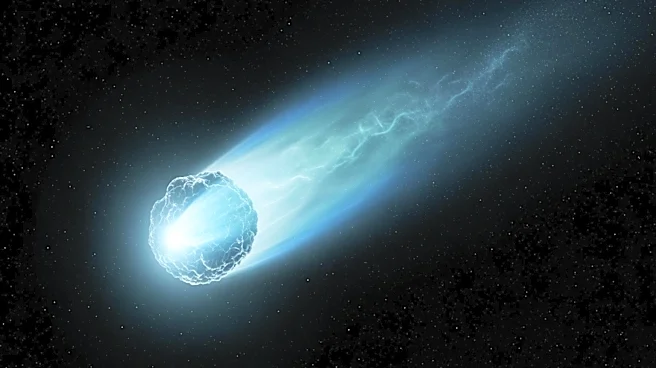
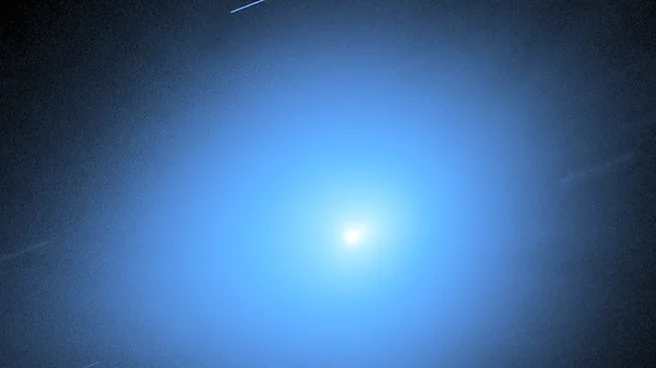
The James Webb Space Telescope (JWST) has detected methane outgassing from the interstellar comet 3I/ATLAS, marking the first time this gas has been identified on an interstellar object. Observations were made after the comet reached its closest point
to the sun, causing increased outgassing due to solar heating. The presence of methane, along with a high abundance of carbon dioxide relative to water, suggests that 3I/ATLAS formed in a different environment compared to comets in our solar system. These findings provide valuable insights into the conditions of other planetary systems and the formation of interstellar objects.
Why It's Important?
Studying interstellar objects like 3I/ATLAS offers a unique opportunity to understand the diversity of planetary formation environments beyond our solar system. The detection of methane and other gases can reveal the chemical composition and physical conditions of the comet's origin. This knowledge enhances our understanding of the processes that shaped our own solar system and Earth. The findings also highlight the potential for discovering new chemical signatures in interstellar objects, which could inform future astronomical research and exploration.
What's Next?
Continued observations of 3I/ATLAS and similar interstellar objects could provide further insights into their composition and behavior. As the comet moves away from the sun, monitoring changes in outgassing patterns will be crucial. Future missions and telescopes may focus on identifying other interstellar visitors to compare their chemical compositions and origins. This research could lead to a broader understanding of the diversity and evolution of planetary systems across the galaxy.