







What's Happening?
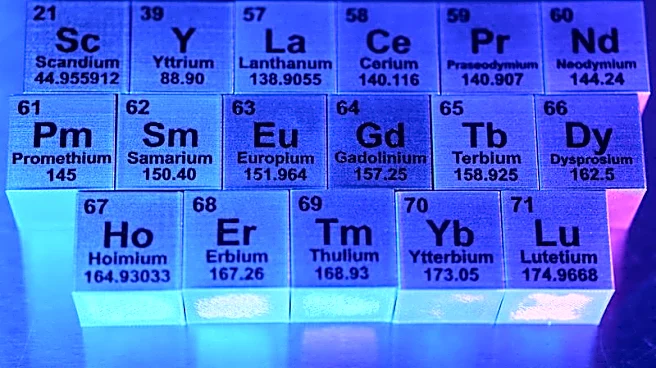
The rare earth market is experiencing significant geopolitical tensions, primarily between the United States and China. A report by Wood Mackenzie highlights that 2026 will be dominated by national policies as both countries vie for leadership in this
critical sector. China's recent restrictions on rare earth exports have led to a scramble among countries to secure these essential materials. The U.S. has responded with increased interventionism, including a $400 million stake in MP Materials, a major rare earth producer. The U.S. Department of Defense has set a deadline for 2027 to eliminate Chinese-sourced rare earths from its supply chain, further intensifying the situation.
Why It's Important?
Rare earth materials are crucial for national defense and the global technology ecosystem, making them a strategic priority for the U.S. and China. The geopolitical tensions and supply chain vulnerabilities could have significant implications for industries reliant on these materials, including technology and defense. The U.S. is actively seeking to reduce its dependence on Chinese rare earths through domestic production and international agreements. This shift could lead to changes in global trade dynamics and impact the availability and cost of rare earth materials.
What's Next?
As the U.S. and China continue their geopolitical maneuvering, the rare earth market will be closely watched for further developments. The U.S. is expected to continue its efforts to secure alternative sources and increase domestic production. The upcoming restrictions by China in November and the U.S. defense supply chain deadline in 2027 will be critical milestones. Additionally, Japan's recent discovery of rare-earth-rich sediment could influence future market dynamics.