



What's Happening?
The Black Hills National Forest will begin offering Christmas tree permits for purchase online through Recreation.gov starting November 12. Permits can also be acquired in person at local Forest Service offices, including the Bearlodge, Hell Canyon, Mystic,
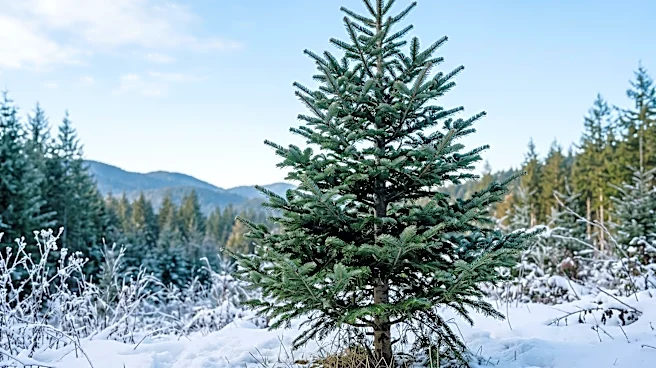
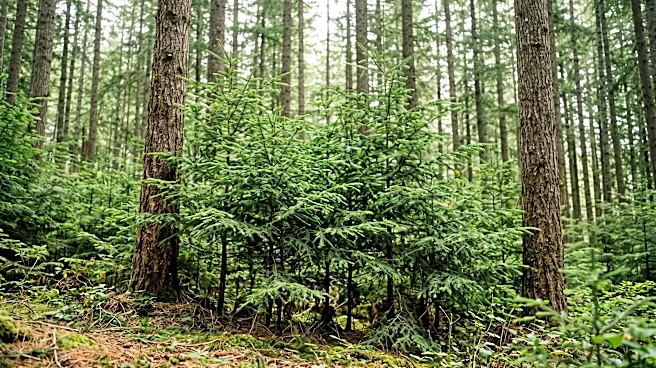
and Northern Hills Ranger Districts. Fourth graders with an Every Kid Outdoors pass are eligible for a free Christmas tree permit, though a $2.50 reservation fee will apply for online purchases. The permit system is designed to improve forest health by allowing the thinning of densely populated stands of small-diameter trees. Forest health experts identify specific areas where removing these trees, often ideal for Christmas trees, benefits the ecosystem by enabling other trees to grow larger and creating more forage for wildlife. Visitors are advised to carefully read the overview and 'need-to-know' information on Recreation.gov before purchasing a permit. Details regarding designated cutting areas, dates, and permissible tree types are available online.
Why It's Important?
The Black Hills National Forest's Christmas tree permit program is crucial for both ecological sustainability and community engagement. By allowing the public to selectively cut Christmas trees, the Forest Service actively manages forest density, which is a key component of wildfire prevention and overall forest health. The removal of smaller, overcrowded trees reduces competition for resources, allowing remaining trees to grow stronger and more resilient. This thinning process also creates open spaces that are vital for wildlife, providing enhanced foraging opportunities and improving habitat diversity. For the public, this program offers an accessible and affordable way to participate in a holiday tradition while directly contributing to conservation efforts. The inclusion of free permits for fourth graders through the Every Kid Outdoors pass encourages environmental education and fosters a sense of stewardship among younger generations, connecting them to national forests in a meaningful way. This initiative demonstrates how recreational activities can be integrated with scientific forest management to achieve broader ecological goals.
What's Next?
Individuals planning to cut a Christmas tree in the Black Hills National Forest should purchase their permits starting November 12, either online via Recreation.gov or in person at a local Forest Service office. It is essential to review all provided information, including designated cutting areas, specific dates, and the types of trees that can be cut. Visitors should also prepare for winter conditions, ensuring they have appropriate gear and tools for their trip. The Forest Service will continue to emphasize responsible cutting practices and adherence to guidelines to ensure the program's environmental benefits are realized. This annual program is expected to continue, with ongoing efforts to educate the public on sustainable forest management and the importance of their participation in maintaining forest health. The availability of both online and in-person options aims to maximize accessibility for all interested parties.
Beyond the Headlines
The Black Hills National Forest's Christmas tree permit program represents a sophisticated approach to forest management that leverages public participation for ecological benefit. This initiative goes beyond simply providing a holiday amenity; it integrates recreational activity with critical conservation strategies, particularly in areas prone to wildfire and overcrowding. By allowing the public to remove specific trees, the Forest Service is effectively crowdsourcing a portion of its thinning operations, which are vital for reducing fuel loads and promoting biodiversity. This model highlights the potential for collaborative conservation, where citizens become active partners in maintaining the health of national forests. The program also serves as an educational platform, raising awareness about the ecological role of thinning and the interconnectedness of forest health, wildlife, and fire prevention. This approach could serve as a blueprint for other national forests seeking innovative ways to manage resources and engage communities in environmental stewardship.