





What's Happening?
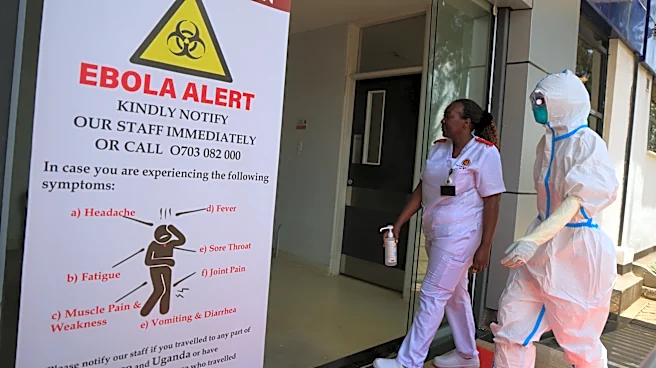
Kenya has released five Ebola patients after they tested negative for the virus and showed no symptoms, with only two patients remaining hospitalized for supportive care. Health officials in Kenya have expressed optimism regarding the country's progress
in containing the outbreak, reporting no new infections. The Ministry of Health also announced the release of 46 individuals who had been quarantined for 21 days after being identified as contacts of the first Ebola patient. This follows the release of 20 other contacts last week, with a final group of 52 expected to complete quarantine and be released soon. The current Ebola outbreak, which originated in Congo in May, has resulted in over 5,000 deaths and more than 10,000 reported cases, making it one of the most severe outbreaks on record. Kenya's first-ever Ebola case was recorded on October 6, when a man who had traveled from Congo through Uganda tested positive and subsequently died at Nairobi Hospital. Authorities identified 135 contacts linked to this patient, eight of whom later tested positive for Ebola, with one of those eight also succumbing to the virus, bringing Kenya's total Ebola-related deaths to two.
Why It's Important?
The successful release of Ebola patients and contacts in Kenya signifies a critical step in controlling the spread of the deadly virus within the country. Effective containment measures, including rapid identification, isolation, and monitoring of contacts, are crucial in preventing wider outbreaks, especially in densely populated areas. The global health community closely monitors such outbreaks, as the rapid international spread of infectious diseases poses significant risks to public health and economic stability worldwide. For the U.S., the containment of Ebola in any region is important due to the interconnectedness of global travel and trade. An uncontrolled outbreak could lead to travel restrictions, economic disruptions, and the potential for the virus to reach U.S. shores, necessitating costly and resource-intensive public health responses. The lessons learned from Kenya's containment efforts can inform and strengthen global pandemic preparedness strategies, benefiting U.S. public health agencies and their international partners.
What's Next?
Despite the positive developments, the Kenyan Ministry of Health maintains a high alert status, emphasizing that the outbreak will not be officially declared over until a recommended 42-day countdown, following the recovery of the final patient, has been completed. This period is crucial for ensuring no new cases emerge and that the virus has been fully eradicated from the community. The remaining two hospitalized patients will continue to receive supportive care until their full recovery and subsequent negative test results. Public vigilance remains a key component of the ongoing strategy, with health authorities urging citizens to report any suspicious symptoms. The international community, including organizations like the World Health Organization and the U.S. Centers for Disease Control and Prevention, will likely continue to monitor the situation closely, offering support and resources as needed to prevent any resurgence of the virus and to strengthen Kenya's long-term public health infrastructure.
Beyond the Headlines
The Ebola outbreak in Kenya, though relatively contained compared to its origin in Congo, highlights the persistent threat of infectious diseases in a globalized world. Beyond the immediate health crisis, such outbreaks can have profound socio-economic impacts, including disruptions to local economies, strain on healthcare systems, and potential stigmatization of affected communities. The successful management of contacts and patient recovery in Kenya underscores the importance of robust public health infrastructure, community engagement, and international collaboration in disease control. This event also serves as a reminder of the ethical considerations involved in public health responses, such as balancing individual liberties with collective safety during quarantine measures. The long-term implications include the need for sustained investment in healthcare capacity building, research into vaccines and treatments, and improved surveillance systems to detect and respond to emerging infectious threats, which are critical for global health security and directly impact U.S. foreign policy and aid initiatives.