





What's Happening?
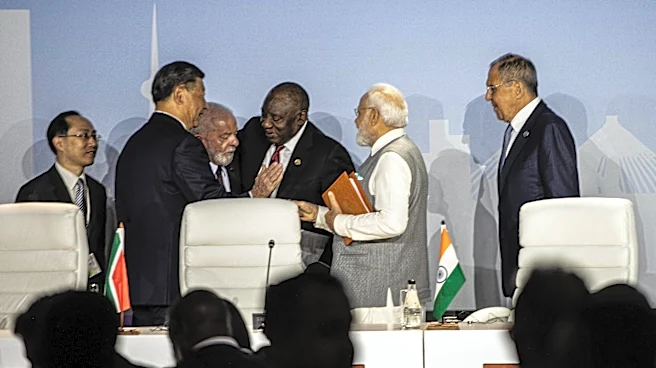
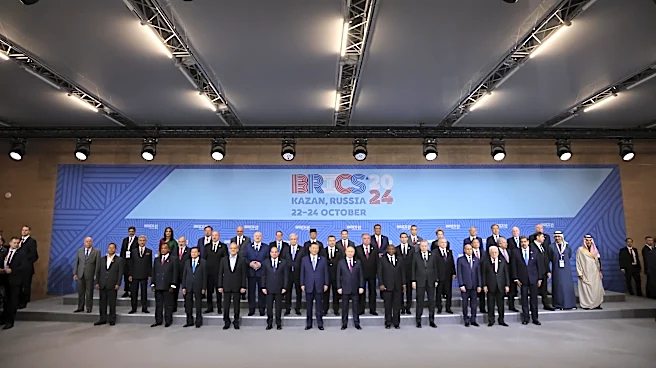
Relations between China and India are experiencing a gradual improvement, marked by sustained diplomatic engagement and practical cooperation. A significant step in this positive trajectory was the meeting between President Xi Jinping and Prime Minister
Narendra Modi at the September 2026 BRICS summit, where both leaders expressed a willingness to strengthen economic ties and multilateral cooperation. This recovery follows a deterioration in relations after the 2020 Galwan border clashes. Recent advancements include the resumption of direct flights, the easing of certain investment restrictions, and renewed high-level dialogue. The Economist Intelligence Unit's (EIU) GeoSync dataset, which tracks bilateral relationships between G20 countries, indicates a steady recovery in the China-India Bilateral Relations Index since 2020. Despite these improvements, strategic competition between the two nations persists, driven by unresolved border disputes, regional rivalries, and economic security concerns.
Why It's Important?
The evolving relationship between China and India holds significant implications for global geopolitics and economic stability. While the current trend suggests a de-escalation of immediate military confrontation risks, the underlying strategic rivalry means that a fundamental reset in their relationship is unlikely. Any future escalation, despite being considered low risk, could severely disrupt critical global supply chains, trade, and investment flows. This highlights the necessity for international businesses and governments to closely monitor geopolitical developments in the region and prepare for potential operational risks. The dynamic between these two major Asian powers influences regional stability and the broader international order, affecting trade routes, resource allocation, and diplomatic alignments across the Indo-Pacific and beyond. The continued competition, even with diplomatic engagement, underscores the complex nature of international relations in a multipolar world.
What's Next?
The gradual improvement in China-India relations is expected to continue, driven by ongoing diplomatic efforts and practical cooperation. However, the inherent strategic competition, fueled by unresolved border issues and economic security concerns, will likely prevent a complete normalization or a fundamental reset of their relationship. Organizations are advised to utilize tools like EIU's GeoSync to track shifts in international relationships and identify emerging geopolitical risks. This proactive monitoring is crucial for businesses to anticipate regulatory changes, detect early warning signs in counterparty networks, and make informed operational decisions to mitigate potential disruptions to their bottom line. The focus will remain on managing the delicate balance between cooperation on economic and multilateral fronts and navigating persistent strategic disagreements.
Beyond the Headlines
The nuanced improvement in China-India relations, set against a backdrop of enduring strategic rivalry, reflects a broader trend in contemporary geopolitics where pragmatic engagement can coexist with deep-seated competition. This dynamic challenges traditional notions of alliances and adversaries, suggesting a more fluid and transactional international landscape. The emphasis on economic ties and multilateral cooperation, even while territorial and regional disputes remain, indicates a strategic calculus aimed at maximizing national interests without necessarily resolving all points of contention. This approach could serve as a model for other complex bilateral relationships, where economic interdependence might temper, but not eliminate, geopolitical competition. The long-term implications involve a recalibration of global power dynamics, with major Asian economies increasingly shaping the rules of international engagement.