








What's Happening?
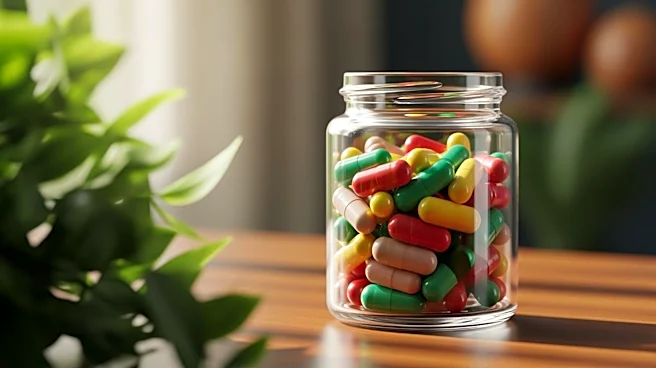
Recent research published in the Journal of the American Geriatrics Society suggests that daily probiotic supplements may offer mental health benefits for older adults. The study involved 58 participants aged 60 and older in India, all of whom were experiencing
moderate depression. Participants continued their usual antidepressant medication while being randomly assigned to receive either a probiotic supplement or a placebo for 12 weeks, followed by an additional 12 weeks of monitoring. Results indicated that those taking the probiotic experienced slightly greater reductions in depression and anxiety symptoms compared to the placebo group. The study highlights the potential of probiotics as a supportive addition to standard antidepressant treatments, though it does not suggest they can replace such treatments.
Why It's Important?
The findings are significant as they offer a potential low-cost, low-stigma treatment option for individuals with depression and anxiety, particularly among older adults. This could be especially beneficial in the U.S., where mental health issues are prevalent and access to affordable treatment options is a concern. The study underscores the importance of probiotics as an adjunctive therapy, which could enhance the effectiveness of existing treatments. However, experts caution against viewing probiotics as a standalone solution, emphasizing the need for comprehensive treatment plans that include therapy and medication.
What's Next?
The study's promising results have led researchers to plan a larger-scale clinical trial to further investigate the effects of probiotics on mental health. This future research aims to confirm the initial findings, identify which populations may benefit most, and determine the long-term efficacy of probiotics in mental health treatment. As the research progresses, it could influence clinical practices and lead to broader acceptance of probiotics as a complementary treatment for mental health conditions.