






What's Happening?
Sesame Care operates as a direct-to-consumer healthcare marketplace, connecting individuals with independent board-certified providers, including doctors and nurse practitioners. The platform aims to offer same-day care for various services, including specialist
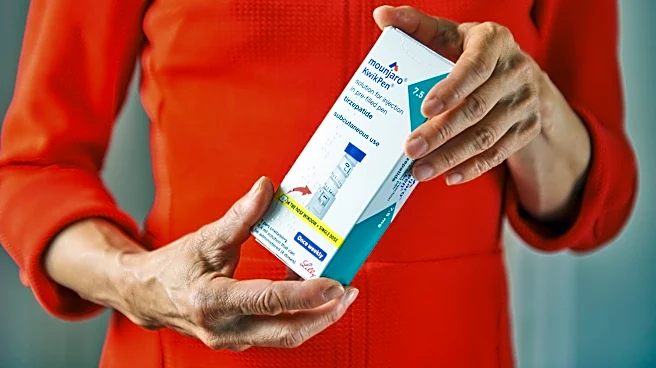
consultations and lab work, at a reduced cost, bypassing traditional insurance networks and monthly club subscriptions. A key offering from Sesame Care is a dedicated weight loss subscription program. This program encompasses initial consultations, regular follow-up appointments, and prescription management. Clinicians on the Sesame platform typically prescribe brand-name tirzepatide, which patients then pick up from their local retail pharmacy. As Sesame primarily functions as a clinician marketplace rather than a pharmacy distributor, patients are responsible for monitoring local pharmacy inventory and covering the retail cash or copay price for their prescriptions.
Why It's Important?
This direct-to-consumer model by Sesame Care is significant for the U.S. healthcare landscape as it offers an alternative to the often complex and costly traditional insurance-based system. By removing the barrier of insurance networks, Sesame Care aims to increase accessibility to healthcare services, potentially benefiting uninsured or underinsured individuals, as well as those seeking more transparent pricing. The focus on a weight loss program, particularly with medications like tirzepatide, addresses a growing public health concern in the U.S. The model empowers consumers to choose their healthcare providers based on profiles and transparent cash-pay fees, fostering greater patient autonomy. However, the responsibility placed on patients to manage pharmacy inventory and medication costs could be a challenge for some, highlighting a trade-off between cost savings and convenience.
What's Next?
The continued growth of direct-to-consumer healthcare platforms like Sesame Care suggests a potential shift in how Americans access medical services, especially for specific needs like weight management. As more consumers seek transparent pricing and direct access to specialists, these models could expand their service offerings and geographical reach. The success of Sesame Care's weight loss program, particularly with the use of tirzepatide, may influence other healthcare providers to adopt similar direct-pay models for specialized treatments. Regulatory bodies might also begin to scrutinize these emerging models more closely to ensure patient safety, quality of care, and fair pricing practices, especially concerning prescription fulfillment and medication costs.
Beyond the Headlines
The rise of direct-to-consumer healthcare platforms like Sesame Care points to a broader trend of consumerization in the U.S. healthcare industry. This model challenges the long-standing dominance of insurance companies and large hospital systems, potentially leading to increased competition and innovation in service delivery. Ethically, it raises questions about equitable access, as those who can afford cash payments may receive faster or more tailored care, while others remain reliant on traditional, often slower, systems. Legally, the distinction between a clinician marketplace and a pharmacy distributor could become a point of contention, particularly regarding liability and medication supply chain management. Culturally, it reflects a growing desire among Americans for greater control over their healthcare decisions and a demand for more straightforward, understandable pricing.