








What's Happening?
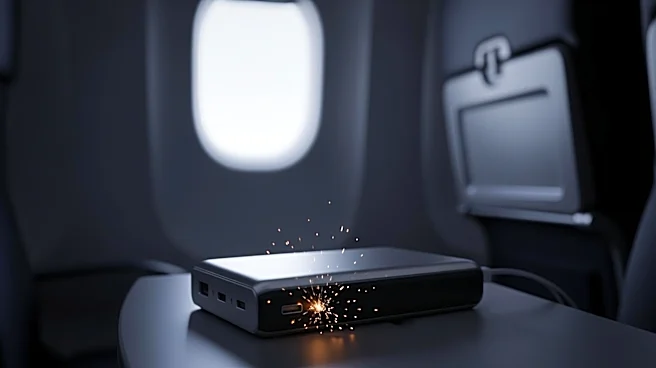
A recent incident involving a passenger's power bank led to a significant delay for travelers on an easyJet flight. The flight, originally en route from Hurghada, Egypt, to London, was diverted to Rome after a passenger informed the crew that a power bank was charging
a device in their checked luggage. Regulations prohibit power banks in the cargo hold due to the fire risk posed by their lithium batteries. As a result, the flight landed in Rome, and passengers had to wait overnight before continuing to London, arriving nearly 16 hours later than scheduled. The UK Civil Aviation Authority emphasized the dangers of lithium batteries, which can cause intense fires if they become faulty or damaged. The incident highlights the need for increased awareness of the risks associated with portable chargers.
Why It's Important?
This incident underscores the ongoing safety challenges faced by the aviation industry regarding lithium batteries. As the use of electronic devices continues to grow, so does the potential risk of fire hazards on flights. Airlines and regulators are increasingly concerned about the safety of power banks, especially those that are cheaply made and lack proper certification. The diversion and delay caused by this incident not only disrupted travel plans but also highlighted the importance of adhering to safety regulations. Ensuring that passengers are aware of and comply with these rules is crucial for maintaining safety in air travel. The aviation industry must continue to educate travelers about the potential dangers of lithium batteries to prevent similar incidents in the future.
What's Next?
In response to such incidents, airlines may implement stricter regulations regarding the carriage of power banks and other lithium battery-powered devices. This could include more rigorous checks at security and boarding gates to ensure compliance with safety rules. Additionally, airlines might increase efforts to educate passengers about the risks associated with lithium batteries and the importance of keeping such devices in the cabin. Regulatory bodies may also consider revising guidelines to address the growing market for portable chargers and the associated safety concerns. These measures aim to enhance passenger safety and prevent future disruptions caused by similar incidents.