








What's Happening?
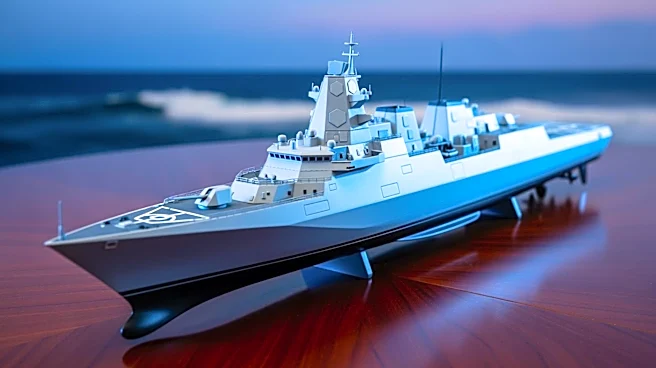
Australia and Japan have signed a significant defense contract valued at 10 billion Australian dollars ($6.5 billion) for the delivery of a fleet of Japanese-designed warships. The agreement includes the construction of the first three Mogami-class frigates
by Mitsubishi Heavy Industries in Japan, with an additional eight to be built in Western Australia. This deal marks a major advancement for Japan's defense industry, which had previously lost a submarine contract to a French company in 2016. The new fleet will replace Australia's aging ANZAC-class frigates, enhancing the country's naval capabilities against modern threats. The first frigate is expected to be delivered by 2029, with the project representing the fastest acquisition of a surface combatant in the history of the Royal Australian Navy.
Why It's Important?
This deal is a strategic move for both Australia and Japan, strengthening their defense ties and enhancing their military capabilities. For Australia, the acquisition of these advanced frigates is crucial for modernizing its naval fleet and ensuring national security in the face of evolving threats. The partnership also signifies Japan's growing role in global defense markets and its efforts to expand military cooperation beyond its traditional alliance with the United States. The deal is expected to boost Japan's defense industry, providing opportunities for technological and industrial collaboration with Australia. Additionally, the project aligns with Australia's new defense strategy, which includes a significant increase in defense spending over the next decade.
What's Next?
The successful implementation of this contract will likely lead to further defense collaborations between Australia and Japan. As the construction of the frigates progresses, both countries may explore additional joint military projects and technology exchanges. The deal could also influence other nations in the region to consider similar partnerships, potentially reshaping defense dynamics in the Asia-Pacific. Stakeholders will be closely monitoring the project's progress and its impact on regional security and defense industry trends.