
What's Happening?
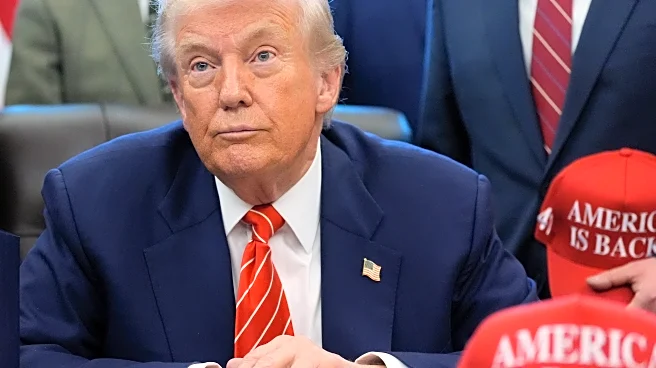
President Trump announced that U.S. intelligence has identified the location of the remains of St.-Sgt.-Maj. Ran Gvili, an Israeli hostage killed in Gaza. During a press conference, Trump stated that the U.S. believes
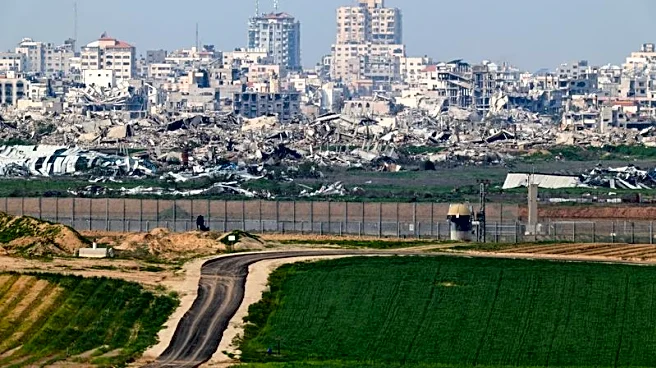
it knows where Gvili's body is located, following a framework agreement with Hamas to return hostages. Gvili was captured on October 7 during a battle at Kibbutz Alumim and is the last remaining Israeli hostage in Gaza. His mother, Talik Gvili, confirmed that Hamas has violated the agreement by not returning her son's remains. She urged the Israeli government and the U.S. administration to pressure Hamas to fulfill its obligations or face sanctions. Hamas spokesperson Hazem Qassem claimed that all available information about Gvili's location has been shared. The search for Gvili's remains is ongoing in Zeitoun, northern Gaza, with coordination between Hamas and Israel.
Why It's Important?
The announcement by President Trump underscores the ongoing geopolitical tensions involving Israel, Hamas, and the U.S. The situation highlights the complexities of hostage negotiations and the challenges in enforcing international agreements. The U.S. and Israel's involvement in pressuring Hamas could influence future diplomatic relations and peace efforts in the region. The case of Ran Gvili also brings attention to the humanitarian aspects of conflict, emphasizing the need for international cooperation in resolving hostage situations. The potential imposition of sanctions on Hamas could have significant political and economic repercussions, affecting the stability of the region and the broader Middle East peace process.
What's Next?
The next steps involve continued diplomatic efforts by the U.S. and Israel to ensure Hamas complies with the agreement to return Gvili's remains. The potential for sanctions against Hamas could escalate tensions, prompting reactions from international stakeholders. The situation may also influence U.S. foreign policy decisions regarding the Middle East, particularly in relation to peace negotiations and humanitarian aid. Monitoring the developments in Gaza and the responses from involved parties will be crucial in understanding the broader implications for regional stability and international relations.