
What's Happening?
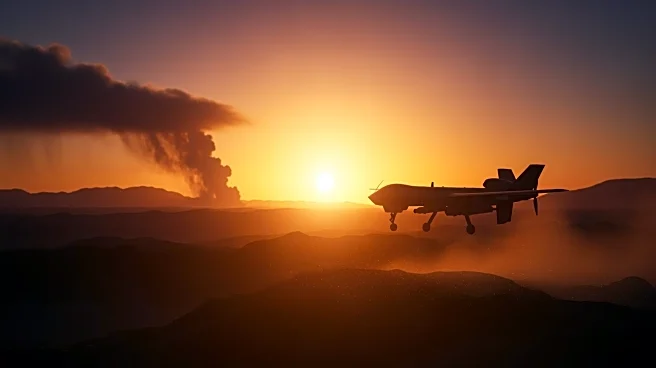
The United States military has executed large-scale strikes against ISIS targets in Syria as part of an ongoing retaliatory campaign named 'Operation Hawkeye Strike.' This operation was initiated following
a fatal attack by an ISIS gunman in Palmyra, Syria, which resulted in the deaths of two U.S. soldiers and a civilian interpreter. The strikes, conducted by U.S. Central Command (CENTCOM) forces alongside partner forces, involved over 90 precision munitions targeting more than 35 sites. The operation aims to dismantle ISIS remnants and prevent them from posing further threats to U.S. forces in the region. The campaign is part of the broader U.S. mission to combat ISIS, which began in the mid-2010s when the group controlled significant territories in Syria and Iraq.
Why It's Important?
The strikes underscore the U.S. commitment to countering ISIS and maintaining regional stability. By targeting ISIS infrastructure, the U.S. aims to prevent the resurgence of the group, which could destabilize the region and threaten international security. The operation also highlights the ongoing U.S. military presence in Syria, reflecting broader geopolitical interests in the Middle East. The campaign serves as a deterrent against future attacks on U.S. personnel and demonstrates the U.S.'s resolve to protect its forces and allies. The operation's success could bolster U.S. influence in the region and reassure allies of its commitment to combating terrorism.
What's Next?
The U.S. is likely to continue its military operations in Syria to ensure the complete dismantling of ISIS capabilities. Further strikes may be conducted as intelligence identifies new targets. The U.S. will also likely engage in diplomatic efforts to strengthen alliances and coordinate with international partners to prevent ISIS's resurgence. Monitoring the situation on the ground will be crucial to adapting strategies and ensuring the safety of U.S. forces and regional stability.