



What's Happening?
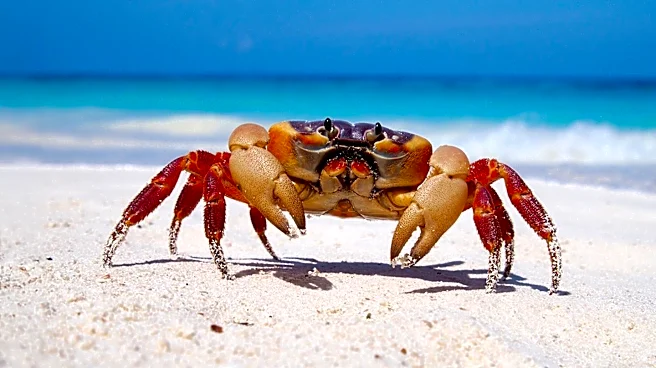
The coconut crab, also known as the robber crab, is the largest land-dwelling crustacean and arthropod, with a leg span of up to one meter and a body weight exceeding four kilograms. Found on tropical islands across the Indian and Pacific Oceans, these
crabs are known for their ability to climb trees, crack coconuts, and deliver powerful pinches. They inhabit coastal forests, often hiding among rocks and burrowing under tree roots. The coconut crab breathes air using branchiostegal lungs, which are an evolutionary bridge between gills and lungs, and can drown if submerged for too long. They return to the sea only when females release eggs into the water. The species can live up to 60 years, with large adults being the result of decades of growth and moulting.
Why It's Important?
The coconut crab's unique adaptations and behaviors highlight the incredible diversity of life and evolutionary processes in isolated ecosystems. As a species listed as Vulnerable by the IUCN, the coconut crab faces threats from human activities, including overharvesting for food, habitat loss, and introduced predators. Understanding and protecting such species is crucial for biodiversity conservation and maintaining ecological balance. The coconut crab's ability to adapt to land life from a marine origin provides insights into evolutionary biology and the resilience of species in changing environments. Their presence also impacts local ecosystems, as they play a role in seed dispersal and nutrient cycling.
What's Next?
Conservation efforts are essential to protect the coconut crab from further decline. This includes implementing sustainable harvesting practices, protecting habitats, and controlling introduced predators. Islands with fewer human populations or increased protection have healthier coconut crab populations, suggesting that targeted conservation strategies can be effective. Continued research on the species' behavior and ecology will aid in developing more effective conservation plans. Public awareness and education about the importance of preserving such unique species can also contribute to their protection.
Beyond the Headlines
The coconut crab's story underscores the broader challenges of conserving biodiversity in the face of human expansion and environmental change. It raises ethical questions about the balance between human needs and wildlife conservation. The species' vulnerability due to its size and slow maturation rate highlights the need for long-term conservation strategies that consider ecological and evolutionary timescales. The coconut crab also serves as a symbol of the unique and often overlooked biodiversity found on remote islands, emphasizing the importance of protecting these ecosystems.