
What's Happening?
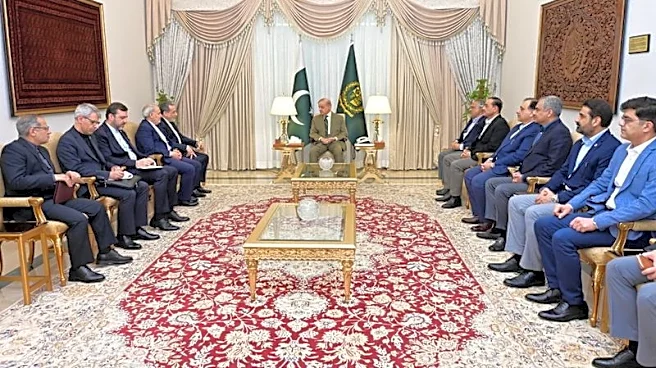
Iran has proposed to end its blockade of the Strait of Hormuz, a critical maritime chokepoint, without addressing its nuclear program. This proposal was communicated to the United States through Pakistan,
amidst ongoing tensions involving Iran, the U.S., and Israel. Iran's foreign minister is currently in Russia for consultations, seeking to negotiate terms that would include lifting the U.S. blockade on Iran. President Trump has expressed skepticism, emphasizing the need for Iran to abandon its nuclear ambitions as part of any agreement. The proposal comes as part of broader diplomatic efforts to de-escalate regional conflicts and stabilize global oil markets.
Why It's Important?
The Strait of Hormuz is a vital passage for global oil shipments, with nearly 20% of the world's oil passing through it. Iran's control over the strait has significant implications for global energy security and economic stability. The proposal to end the blockade could ease tensions and reduce the risk of military confrontations in the region. However, the U.S. demands regarding Iran's nuclear program remain a significant hurdle. The outcome of these negotiations could impact global oil prices, international relations, and the geopolitical balance in the Middle East.
What's Next?
Negotiations are expected to continue, with Iran seeking support from Russia and other regional players. The U.S. is likely to maintain its stance on Iran's nuclear program, potentially complicating diplomatic efforts. If an agreement is reached, it could lead to a reduction in military tensions and a stabilization of oil markets. However, failure to reach a consensus could result in continued economic and geopolitical instability. The international community will be closely monitoring these developments, as they have far-reaching implications for global security and economic interests.