





What's Happening?
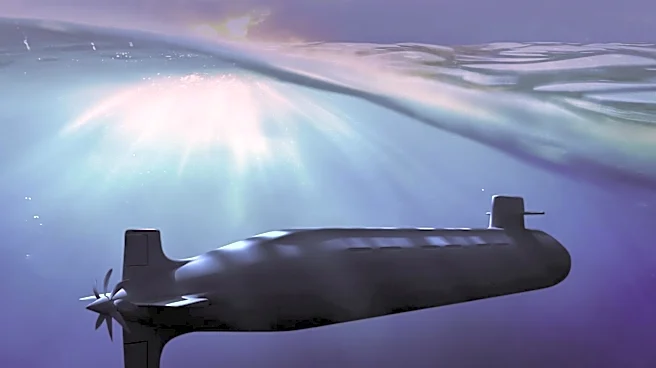
The U.S. Navy is developing a new nuclear attack submarine, designated SSN(X), which is designed to be faster, require less maintenance, and function as a 'mothership' for undersea drones. Rear Adm. Andrew Miller, head of submarine requirements, announced
these details on November 12, 2026, at the Naval Submarine League’s annual conference in Arlington, Virginia. The Navy is finalizing the program's analysis of alternatives (AoA) and aims for Milestone A approval, marking entry into early development, by the end of 2026. The SSN(X) is intended to succeed the Virginia-class submarines, with construction planned to begin in the early 2040s. Key characteristics include higher flank and tactical control speeds, improved operational availability, decisive lethality, superior stealth, layered survivability, and organic hosting and command and control of robotic and autonomous systems. The Navy's FY2026 budget requested $622.8 million for SSN(X) research and development, including funds for a new reactor plant.
Why It's Important?
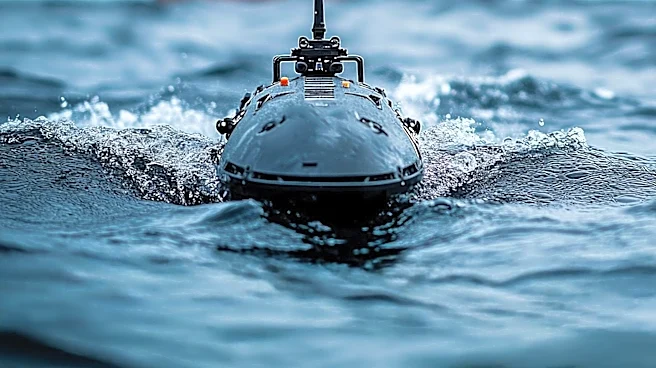
This development is crucial for maintaining the U.S. Navy's undersea advantage, especially in response to the growing naval capabilities of peer adversaries like China. The SSN(X)'s ability to launch and control uncrewed undersea vehicles from its torpedo tubes will significantly extend the sensing and engagement range of each crewed submarine, transforming its role from a standalone hunter-killer to a 'capital mothership.' This shift is vital as the U.S. Navy faces challenges in increasing its submarine fleet size, with current Virginia-class production rates falling short of targets. The higher cost of the SSN(X), estimated by the Congressional Budget Office at $8.7 billion per hull compared to the Navy's $7.1 billion estimate, highlights the significant investment required. The strategic importance is underscored by concerns about China's potential to field 20 to 40 new attack submarines within a decade, making advanced, drone-integrated platforms essential for covering vast ocean areas with fewer crewed hulls.
What's Next?
The U.S. Navy is seeking Milestone A approval for the SSN(X) program by the end of 2026, which will formally initiate its early development phase. Construction of the first SSN(X) boat is currently projected to begin in the early 2040s, though the schedule has already experienced delays. The FY2028 budget request will provide further insight into whether the Navy plans to accelerate design funding for the program. Key unknowns that will be defined in the coming years include the specific propulsion plant, final displacement, and overall cost. Additionally, the Navy must address how it will sustain submarine design teams during the gap between the Columbia-class and SSN(X) design work. The integration of autonomous systems will be a critical focus, as it is seen as essential for multiplying the reach of each submarine and addressing potential quantity risks in the fleet.
Beyond the Headlines
The SSN(X) program represents a fundamental shift in naval warfare doctrine, moving towards a more integrated and networked undersea combat system. The emphasis on 'tactical control speed' and 'operational availability' reflects a broader strategy to enhance the effectiveness and readiness of the submarine fleet, addressing long-standing maintenance bottlenecks at U.S. public shipyards. The design's larger hull diameter, comparable to the Columbia-class ballistic missile submarine, suggests a significant increase in payload capacity and architectural flexibility, which cannot be retrofitted into existing Virginia-class hulls. This evolution also raises questions about the future of human-machine teaming in highly sensitive military operations and the ethical and legal frameworks that will govern the deployment of autonomous undersea drones. The program's success will depend not only on technological advancements but also on the Navy's ability to manage costs, maintain industrial capacity, and adapt its operational strategies to fully leverage these new capabilities.