
What's Happening?
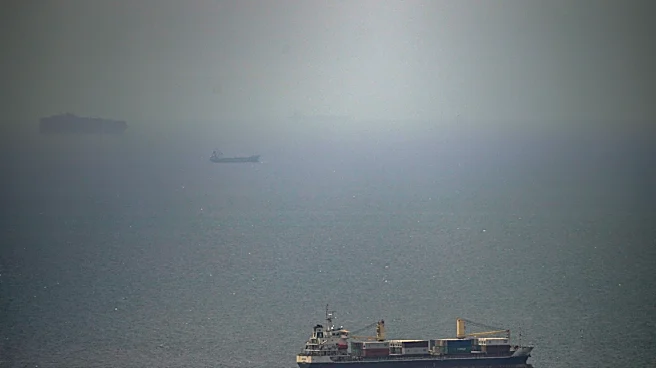
President Trump is set to hold security talks with his national security team regarding Iran's recent proposal to reopen the Strait of Hormuz and lift the U.S. naval blockade, while deferring nuclear negotiations. The proposal, presented by Iran, aims
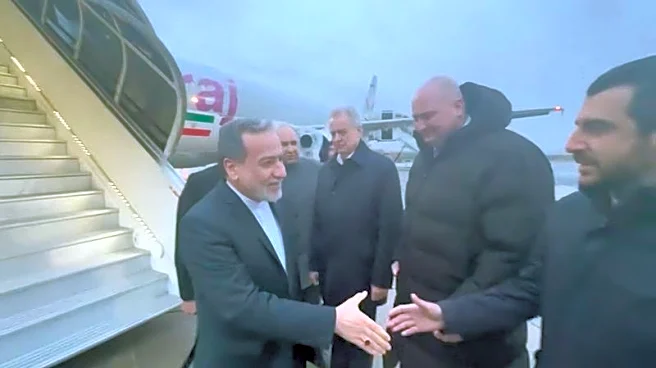
to bypass the contentious nuclear program issue. However, the Trump administration remains skeptical, with President Trump demanding the surrender of enriched uranium and a ban on enrichment for at least 20 years. The U.S. has expressed confidence in the effectiveness of the blockade, which is reportedly causing significant economic damage to Iran by preventing oil export revenue. Meanwhile, Iran's Foreign Minister Abbas Araghchi has been engaging in diplomatic discussions with Russia, where President Putin received a message from Iran's supreme leader.
Why It's Important?
The ongoing negotiations and proposals between the U.S. and Iran are critical as they impact global oil markets and regional stability. The U.S. blockade on Iran's ports is a significant pressure point, affecting Iran's economy and its ability to export oil. The outcome of these talks could influence international relations, particularly with countries reliant on oil passing through the Strait of Hormuz. The U.S. demands for Iran to halt its nuclear program are central to the negotiations, with potential implications for non-proliferation efforts and regional security dynamics. The diplomatic engagements by Iran with Russia and other countries highlight the geopolitical complexities and the search for alliances in the face of U.S. pressure.
What's Next?
The next steps involve further discussions within the Trump administration on whether to resume military actions against Iran or continue with the blockade strategy. Iran's diplomatic efforts with Russia and other nations may lead to new alliances or support, potentially influencing the negotiation dynamics. The U.S. and Iran may continue to explore diplomatic channels, but the fundamental disagreements over Iran's nuclear program remain a significant hurdle. The international community, including the United Nations, may play a role in facilitating dialogue or proposing solutions to ease tensions and ensure the safe passage of oil through the Strait of Hormuz.