







What's Happening?
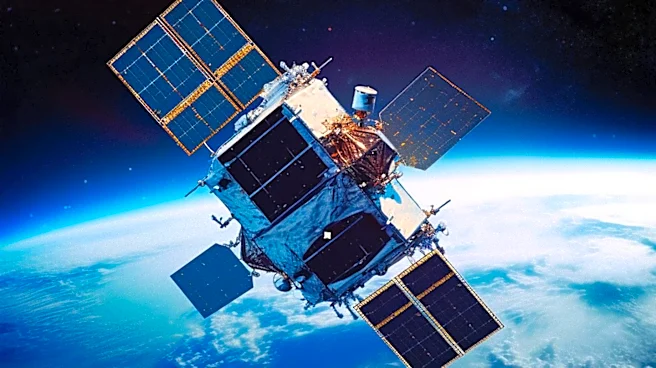
The European Space Agency's Copernicus Sentinel-1A satellite has officially ended its mission after 12 years in orbit. Originally designed for a seven-year lifespan, the satellite exceeded expectations by providing valuable data that enhanced understanding
of Earth's changing environment. Launched on April 3, 2014, Sentinel-1A was equipped with advanced C-band synthetic aperture radar, allowing it to capture high-resolution images regardless of weather conditions. Its data supported various applications, including climate studies, agricultural monitoring, and disaster response. The satellite's mission concluded on June 29, 2026, as confirmed by ESA’s Operations Centre in Germany.
Why It's Important?
Sentinel-1A's mission has had a significant impact on global environmental monitoring and scientific research. By providing free and open access to its data, the satellite has supported numerous studies and operational services worldwide. Its ability to monitor Arctic sea ice, track glacier movements, and detect oil spills has been crucial for environmental protection and public safety. The satellite's extended service period was particularly vital after its sister satellite, Sentinel-1B, experienced a power-system failure in 2021. Sentinel-1A's contributions have laid a foundation for future scientific discoveries and will continue to inform research and decision-making for years to come.
What's Next?
Although Sentinel-1A's mission has ended, the Copernicus program continues with Sentinel-1C and Sentinel-1D, ensuring ongoing Earth observation capabilities. These satellites will maintain Europe's radar eye on the planet, continuing to provide critical data for environmental monitoring and scientific research. The legacy of Sentinel-1A will persist through the extensive archive of radar images it has amassed, which will remain a valuable resource for future studies and operational applications.