



What's Happening?
Adam Vargas, a prominent South Florida graffiti artist known as 'ATOMIK,' was arrested on Monday after allegedly spray-painting an announcer's booth at the Miami Seaquarium. Authorities stated that Vargas, 45, was charged with burglary of an unoccupied
structure and criminal mischief. According to the Miami-Dade Sheriff's Office, deputies responded to reports of a burglary at the Seaquarium. A security guard observed a man, later identified as Vargas, on surveillance video arriving on a bicycle. Deputies located Vargas in the Golden Dome area, actively spray-painting the booth. During his court appearance, a judge set Vargas' bond at $3,000 and issued an order for him to stay away from the Miami Seaquarium.
Why It's Important?
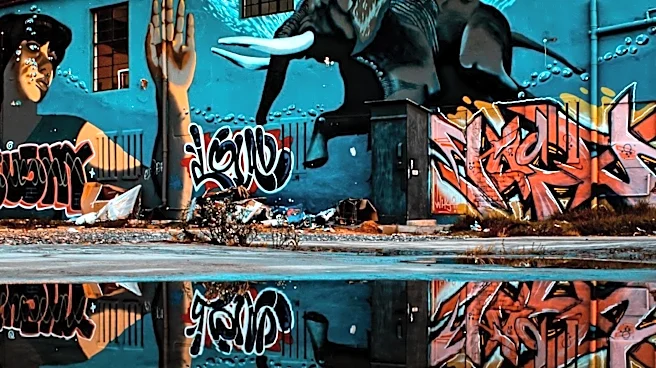
This incident highlights the ongoing tension between street art and property rights, particularly when it involves public or commercial spaces. While 'ATOMIK' is a well-known figure in the graffiti art community with a significant online following, his arrest underscores that unauthorized artistic expression on private property is considered a criminal act. The charges of burglary and criminal mischief reflect the legal framework that prioritizes property protection over artistic intent in such contexts. This event could spark discussions within the art community about the boundaries of public art and the legal consequences artists face when their work crosses into vandalism, potentially influencing how other artists approach their craft in public spaces.
What's Next?
Adam Vargas will face legal proceedings for the charges of burglary of an unoccupied structure and criminal mischief. The court's order for him to stay away from the Miami Seaquarium will remain in effect. The incident may lead to increased security measures at the Miami Seaquarium and other similar establishments to deter future acts of vandalism. For the art community, this arrest could prompt further debate on the legal and ethical considerations of street art, potentially influencing how artists choose their canvases and how property owners respond to unauthorized art. The outcome of Vargas's case could set a precedent or at least serve as a cautionary tale for other graffiti artists.
Beyond the Headlines
The arrest of 'ATOMIK' delves into the complex relationship between art, public space, and legality. It raises questions about what constitutes art versus vandalism, and who has the authority to define these boundaries. For a well-known artist with a large social media following, such an arrest can paradoxically increase their notoriety while also highlighting the legal risks associated with their chosen medium. This event could also fuel broader conversations about urban aesthetics, the role of street art in cultural landscapes, and the potential for legal avenues for artists to create public works without facing criminal charges. It underscores the ongoing challenge of integrating unsanctioned artistic expression into regulated urban environments.