





What's Happening?
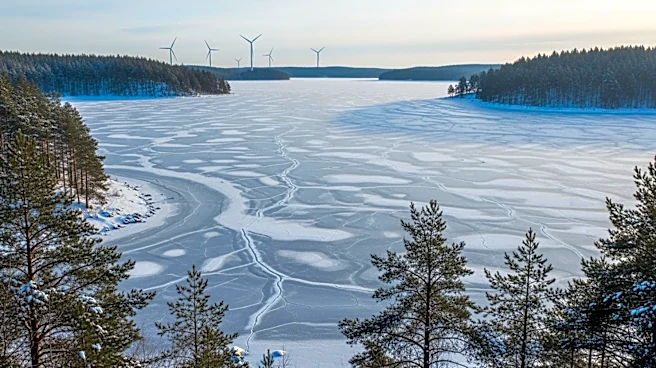
Norway is experiencing its driest winter in decades, leading to a significant reduction in snow reserves that are crucial for hydropower generation. This situation has resulted in a 25 terawatt-hour energy deficit, nearly a fifth of Norway's total hydropower output
from the previous year. The lack of snow has caused water levels in reservoirs to drop, prompting companies to limit outflows. As a result, electricity exports to the UK and Germany have decreased by about 50% and 40%, respectively, causing a surge in Nordic electricity prices. The situation is exacerbated by a cold winter that increased electricity demand and reduced wind generation, further straining the energy supply.
Why It's Important?
The reduction in hydropower output from Norway, often referred to as Europe's 'biggest battery,' has significant implications for the European energy market. The decrease in exports to major markets like the UK and Germany has led to increased reliance on more expensive energy sources, driving up electricity prices and market volatility. This situation highlights the vulnerability of energy systems that depend heavily on weather conditions, particularly in the context of climate change. The energy shortfall also comes at a time when Europe is dealing with higher gas prices due to geopolitical tensions, compounding the region's energy challenges.
What's Next?
As winter ends, the opportunity to replenish water reserves is diminishing. While rainstorms may provide some relief, a sustained trend of increased precipitation is necessary to restore reservoir levels. The ongoing energy deficit is likely to continue affecting electricity prices and market stability in the short term. Energy companies and policymakers may need to explore alternative strategies to mitigate the impact of such weather-related disruptions in the future, potentially increasing investments in diverse and resilient energy sources.